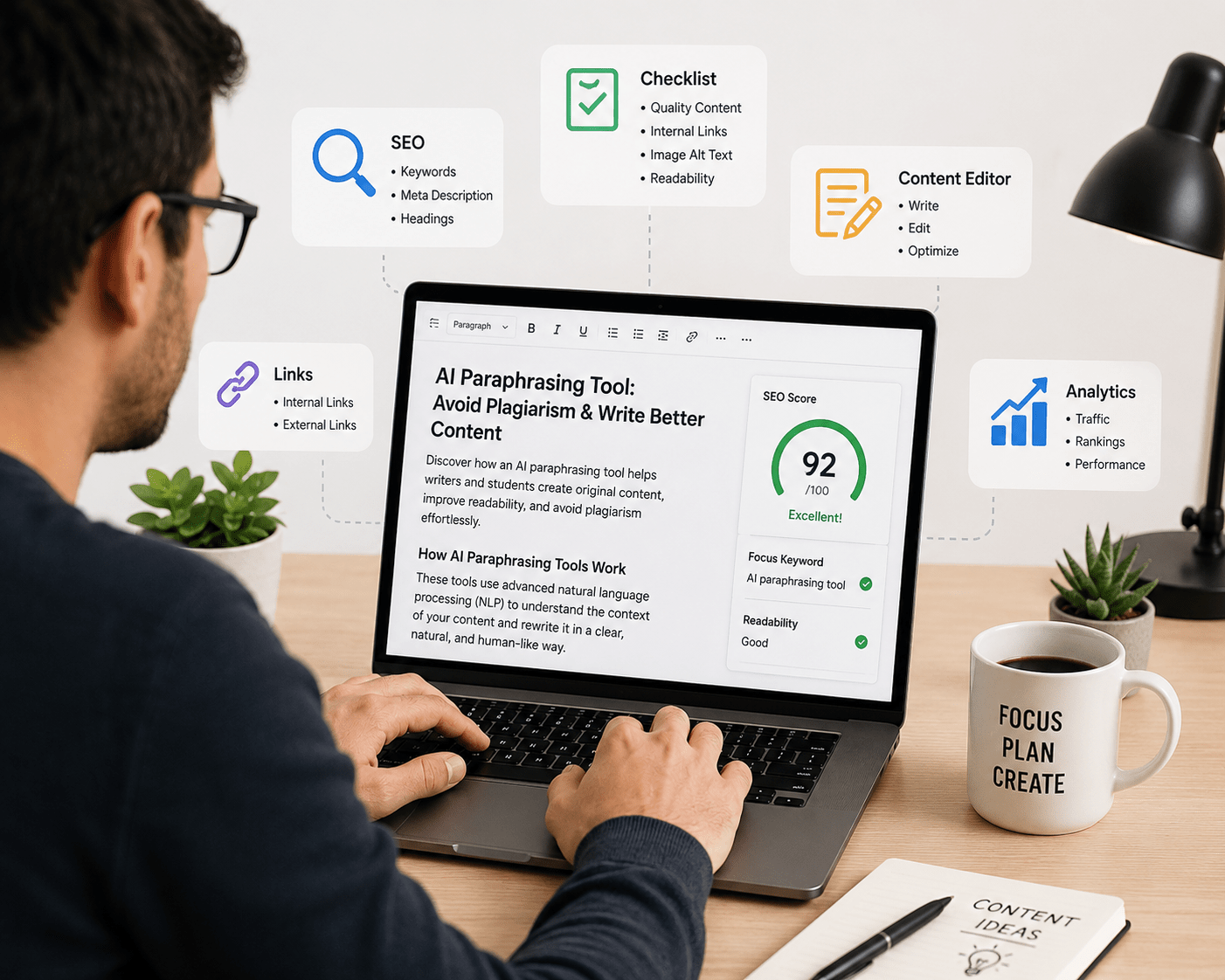

Optimizing digital content is no longer optional for businesses that want to grow online. Quality content needs to do two things at once — speak directly to your readers and perform well on search engines. Getting both right is the real challenge. A good piece of content is optimized for search engines & directly speaks to readers on a personal level. But optimizing content isn’t as simple as it sounds.
How to do so? Don’t be worried; we’re going to share the method of optimizing content so it delivers the best results.
We’ll give a list of some effective web tools & writing techniques that help refine your content, improve readability, & increase engagement.
Importance of Optimizing Content
Great content is more than just well-written text. It’s strategic. It’s designed to directly speak with your audience & perform well on search engines like Google.
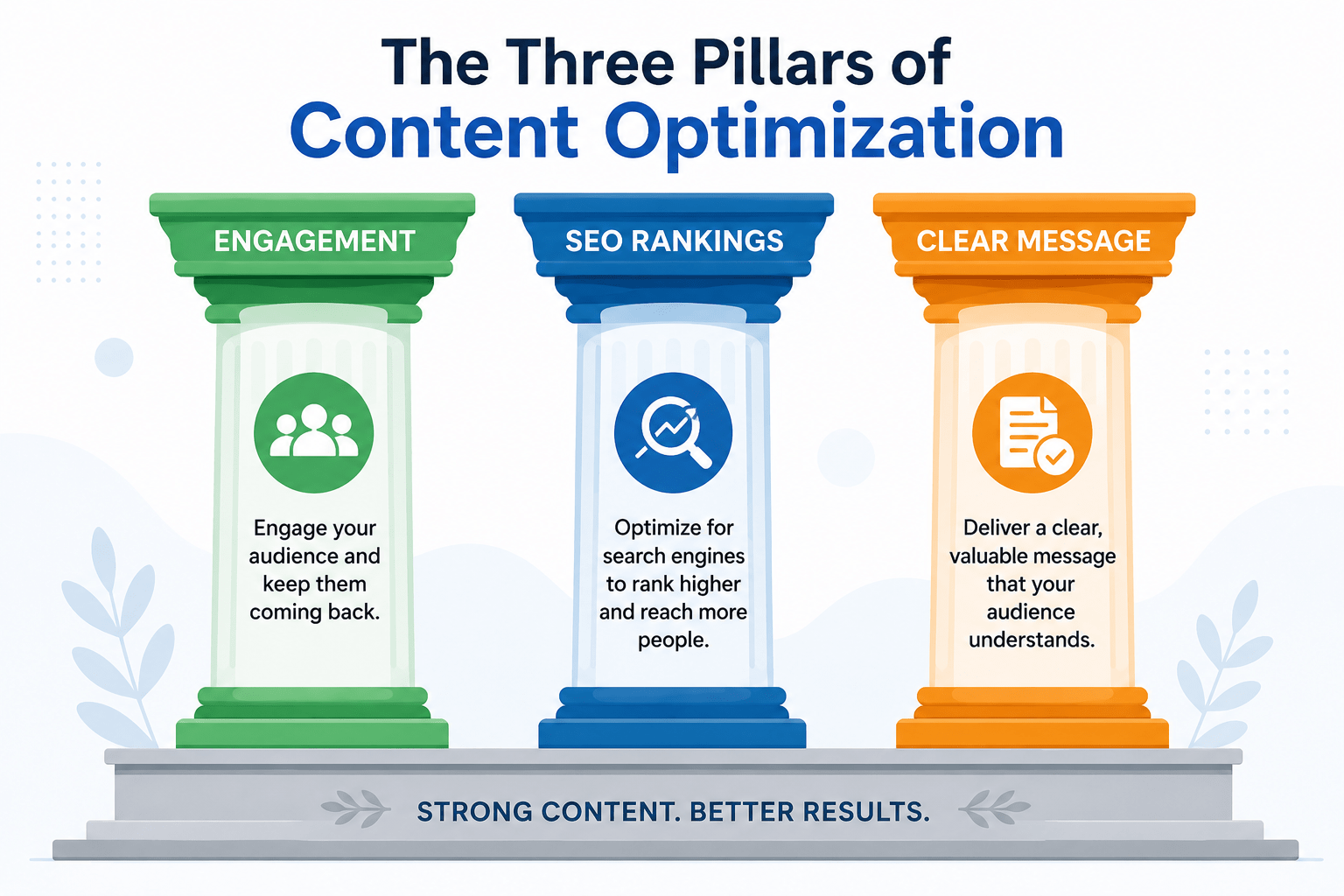
By optimizing digital content, you make sure that:
- Readers stay engaged & read your content.
- Your content ranks higher on search engines.
- Your message is clear, concise, & compelling.
Now move on to the next section to explore the tools & techniques to achieve this.
Web Tools for Optimizing Digital Content
Some web tools can help refine your content & enhance its impact. Here are some of the best ones:
AI Writing Assistants
AI writing tools can be a great asset. They help you generate content, improve sentence structure, & suggest better word choices.
Popular AI tools:
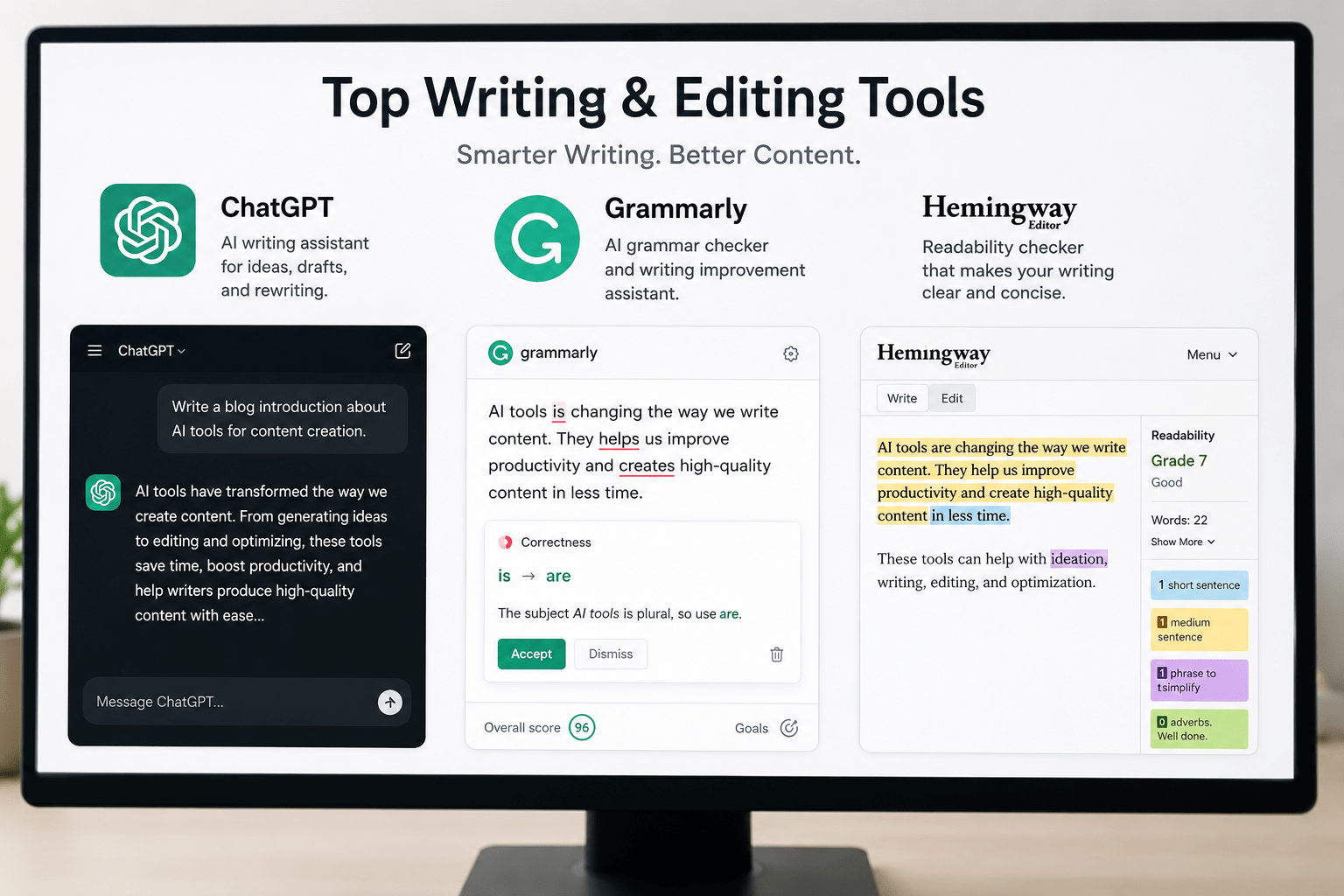
- ChatGPT
Sometimes, words don’t pop up in writers’ minds. It’s quite miserable. Here, ChatGPT helps you generate content in moments. You only need to input your requirements, & it delivers results. This way, it gives you the best starting point. You can take inspiration from the written content & create a copy accordingly.
- Text Humanizer by Paraphrasing-tool.ai
AI-generated content often lacks human warmth; it doesn’t sound human-like. This is because it contains structured phrases & patterns that AI detector tools can easily spot. Here, the AI humanizer tool assists you in turning AI text into something more impactful, authentic, & human-sounding. It tweaks the text without changing its intended meaning. Perfect for writers who struggle to humanize AI-written text.
- Grammarly
Even professional writers make grammar mistakes. Grammarly is one such tool that specializes in catching all mistakes in grammar, punctuation, & even style so you can remove them to make your content flawless. Most importantly, the tool gives suggestions for refining the sentence structure & phrases.
- Hemingway Editor
If your content is hard to read, readers will skip it & look for something simpler & more engaging. The Hemingway Editor tool underlines all complicated sentences & passive voice. You can then refine them to make your content more impactful. It’s super easy to use. Just input the text & it highlights the readability errors.
SEO Optimization Tools
Search engine optimization (SEO) is important if you want people to easily discover your content. SEO tools analyze your content & suggest improvements to boost rankings.
Best tools for SEO:
- Yoast SEO
A must-have plugin for WordPress users. Yoast SEO provides readability & keyword optimization tips to users. With this tool, you can create catchy titles & meta descriptions that convince readers to go through your article. In addition, it offers 24/7 support for your help.
- Ahrefs
Ahrefs is one of the most popular choices among SEO professionals. It’s known for its backlink analysis potential. With this tool, you can view your site’s backlink profile, including no. of backlinks, anchor text distribution, & a lot more.
- SEMrush
SEMrush offers several features, such as SEO, market research, social media management, & others. It has a wide range of SEO features like keyword research, site audits, rank tracking, & many others. You can use these features to optimize your content.
Paraphrasing & Rewriting Tools
Paraphrasing sentences to enhance clarity can be a challenging task. Paraphrasing tools simplify this process by restructuring sentences without changing the intended meaning.
Top choices:
- Paraphrasetool.ai
Don’t know how to present the same idea in a more impactful manner? This Paraphrase tool has your back. With AI paraphrasing modes (Fluency, SEO, Formal, Academic, Creative, & Anti-Plagiarism), it helps you paraphrase text in your desired writing style. The good thing is that it retains the original meaning of the text.
- QuillBot
QuillBot helps you refine the quality of your content. How? By rearranging the structure & giving your text a new look! Just like Paraphrasetool.ai, QuillBot offers multiple modes to help you rewrite content in your desired tone. These modes include Simple, Shorten, Humanize, Fluency, Expand, & many others.
Writing Techniques for Better Digital Content
Even with the best tools, your writing skills matter. Here’s how you can improve the quality & impact of your content.
1. Use Conversational Language
The internet is not a university lecture hall. People prefer content that feels like a conversation rather than a formal report.
Instead of:
“It is imperative to optimize content for maximum engagement.”
Say:
“Want more engagement? Optimize your content the right way.”
Pro Tip: Use contractions, everyday words, & a friendly tone to keep readers engaged.
2. Break Up Large Text Blocks
Big paragraphs look boring. Shorter paragraphs, bullet points, & subheadings make content skimmable. You should:
- Use bullet points for key takeaways.
- Keep paragraphs between 1-3 sentences.
- Add subheadings to guide the reader.
Readers scan content first. If it looks easy to read, they’ll stick around.
3. Tell Stories
Facts inform. Stories connect. Avoid stating just a point. Instead, back it up with a personal experience or real-world example.
Example:
- Before: “A well-optimized website increases traffic.”
- After: “Last month, I optimized my blog posts & saw a 30% boost in traffic in just two weeks!”
Pro Tip: People remember stories, not statistics. Add stories whenever possible.
4. Edit for Flow & Readability
AI-generated or first-draft content often needs refinement. Here’s how to polish it:
- Use an active voice. (“We created this guide,” not “This guide was created by us.”)
- Read it aloud. If it sounds robotic, rewrite it.
- Replace complex words with simpler alternatives.
If your content sounds robotic when spoken aloud, rewrite it until it flows naturally.
5. Add Emotion & Empathy
Robotic content doesn’t connect. Human content does. If you’re writing about a common struggle, acknowledge it. You can write something like this:
“Sometimes, writers put a lot of effort into writing a piece of content. But what if no one reads it? I know this frustrating moment!”
This makes your content relatable.
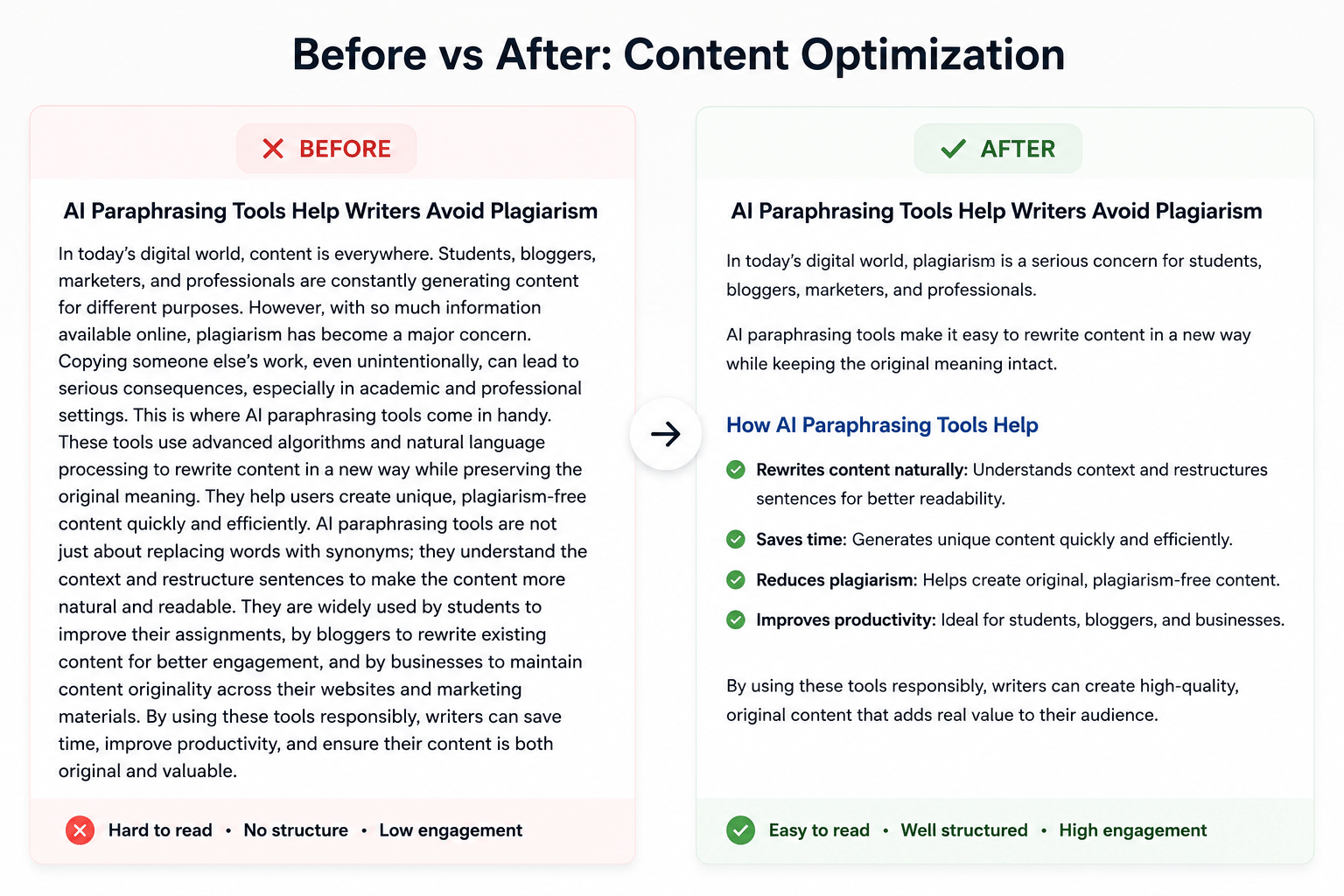
6. Add Visuals & Formatting Enhancements
Walls of text are boring. Break them up with:
- Images to illustrate points.
- Bold text to highlight key ideas.
- Lists & tables for structured information.
Frequently Asked Questions
What does optimizing digital content actually mean?
It means improving your content so it ranks well on search engines and keeps readers engaged at the same time. This includes using the right keywords, writing clearly, formatting properly, and making sure the content answers what your audience is actually searching for.
Which is the best free tool for optimizing digital content?
For SEO, Rank Math or Yoast SEO are the most reliable free options for WordPress users. For readability, the Hemingway Editor is free and straightforward. For grammar, Grammarly’s free version covers the basics well.
How often should I optimize existing content?
A good rule of thumb is to revisit published articles every six to twelve months. Update outdated information, improve keyword targeting based on current search trends, and check whether internal links still point to relevant content.
Does content length affect SEO performance?
Yes, but length alone does not guarantee better rankings. Content that fully answers the reader’s question tends to perform better than thin content, regardless of word count. Aim for completeness, not just volume.
Can I over-optimize my content?
Yes. Keyword stuffing, forced phrasing, and unnatural repetition all hurt rankings rather than help them. Google’s algorithms are designed to detect content that prioritizes keywords over reader experience. Write for your reader first, then optimize.
What is the difference between readability and SEO optimization?
Readability focuses on how easily a human reader can understand and enjoy your content. SEO optimization focuses on how well search engines can crawl, understand, and rank it. The best content does both. Tools like Hemingway Editor handle readability while tools like Yoast or Rank Math handle the SEO side.
Do AI writing tools hurt content quality?
Not when used correctly. AI tools work best as assistants that speed up drafting or help with rewrites. The problems start when writers publish AI output without editing or adding their own perspective. Your judgment and voice are still what make content worth reading.
Conclusion
Optimizing digital content comes down to two things working together: the right tools and the right writing habits.
The tools handle the technical side. They improve your grammar, strengthen your SEO, simplify complex writing, and help you produce more in less time. But tools only go so far. The writing techniques covered here — conversational language, storytelling, clear formatting, and genuine empathy for your reader — are what make content worth reading in the first place.
Use the tools as a support system. Let the writing techniques shape how you communicate. And always put your reader’s experience ahead of search engine requirements. When those two things align, the rankings tend to follow naturally.
Start with one tool and one technique from this guide. Apply them consistently. The results compound over time.
Also Read — How AI-Based Paraphrasing Tools Help You Write Better Blog Content