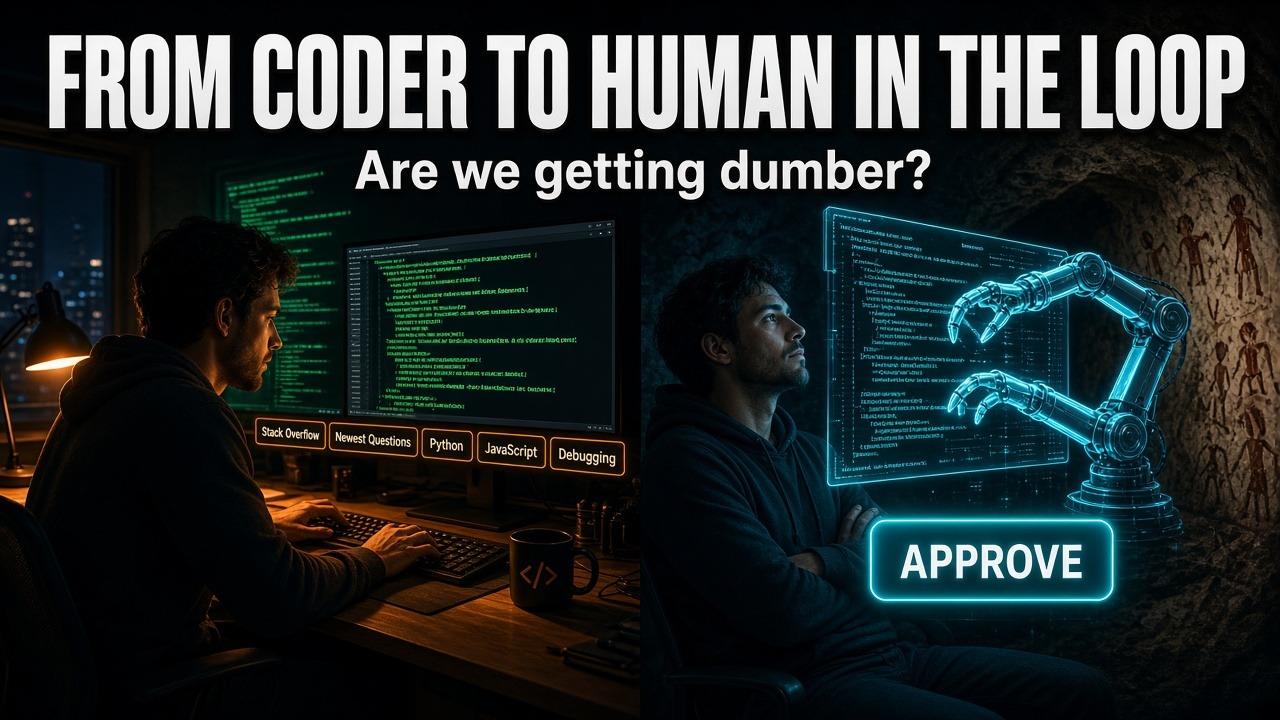

I still remember my early days as a developer, long before AI coding tools existed. A blank editor, a bug that made no sense, ten Stack Overflow tabs open and a documentation page I had read three times. Every line I shipped, I had typed and fought for. That was coding before AI coding became normal.
Today my day looks very different. I describe what I want, an AI writes the code, another AI writes the tests, and an agent opens a pull request while I sip chai. My job is to read, check and press approve. Somewhere along the way AI coding turned me from a coding developer into just a human in the loop.
AI coding changed the job faster than most of us noticed. So let’s talk about how that happened, what it costs us, and the five habits that keep you a real developer.
How did we write code before AI coding tools showed up?
Not that long ago, coding was mostly a memory and search game. You knew your language, you knew where the docs lived, and when you got stuck you searched for someone who had hit the same error in 2014. Copy, paste, tweak, pray.
It was slow, but it built something deep. You understood why a fix worked because you had to dig for it. If you want a feel for what that old checklist looked like, my post on things you need to know to be a developer is a nice time capsule.
What changed when autocomplete became AI?
The first shift felt harmless. Tools like GitHub Copilot started finishing our lines, then our functions. It felt like a smarter IntelliSense, the autocomplete built into code editors. We were still in charge, and early AI coding just saved some typing.
Then chat assistants arrived and AI coding moved into the browser. Stack Overflow quietly lost its spot as the first tab. Instead of searching, we asked. Instead of reading five answers, we got one confident reply, usually right, sometimes very wrong.
When did AI coding start writing whole features on its own?
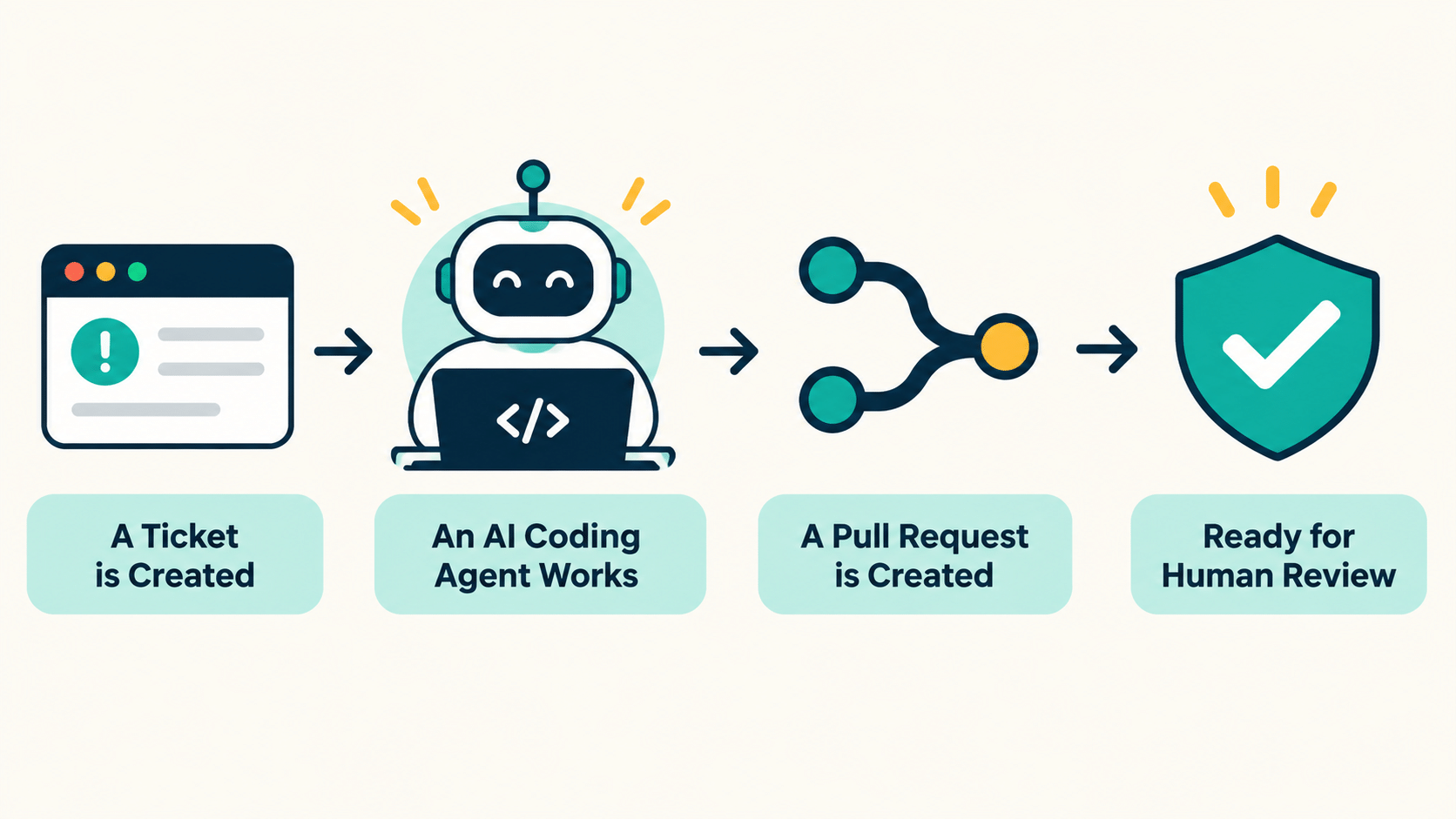
This is the part that really changed the job. AI agents, programs that plan and carry out multi-step tasks on their own, can now read a codebase, plan a change, edit many files, run the tests and open a pull request. AI coding agents from GitHub, Anthropic, OpenAI and tools like Cursor all work this way now. You give a ticket, you get back a PR.
Then came vibe coding, where you just describe the vibe of what you want and accept whatever comes back without reading much of it. The 2025 Stack Overflow Developer Survey even added questions on AI agents and vibe coding, which tells you how mainstream AI coding got.
Also Read: full-stack-developer-roadmap/
Is the developer now just a reviewer and approver?
For a lot of daily AI coding work, honestly yes. My role has slowly moved from writer to editor. I write prompts, set the context, review diffs (the line-by-line changes in a pull request), reject bad ideas and approve the good ones. The thinking moved up a level, from how to write this loop to whether this change is even the right change.
That’s not nothing. Good reviewing needs real skill. But it’s a very different muscle from building something line by line, and it’s easy to get lazy with it.
What are the real benefits of AI coding?
I won’t pretend AI coding is all bad. Boilerplate is gone. Writing tests, docs, regex and migration scripts takes minutes. Learning a new framework is faster when you can ask questions in plain words. Solo developers can now build things that needed a small team before.
Developers clearly feel the value of AI coding. The 2025 Stack Overflow survey found 84% of respondents use or plan to use AI tools in their development process, up from 76% the year before, and 51% of professional developers use them daily.
Does AI coding actually make developers faster?
This is where it gets interesting. In a 2025 randomized study by METR, experienced open source developers took 19% longer to finish tasks when they were allowed to use AI coding tools. The funny part is they expected AI to speed them up by 24%, and even afterwards believed it had made them 20% faster.
To be fair, METR itself describes that result as a snapshot of early 2025 tools. Its February 2026 update says developers are likely more sped up now, though selection effects make the size of the gain hard to measure. AI coding tools have improved a lot. But the lesson about feeling faster versus being faster stays with me.

Can we trust code that AI writes?
Short answer: not blindly. Two sets of numbers explain why.
What do developers themselves say about trust?
Developers themselves are not sure. The same Stack Overflow survey found more developers actively distrust the accuracy of AI tools (46%) than trust it (33%), and only 3% highly trust the output.
What does the data say about AI coding security?
Security is the scary bit. Veracode’s 2025 GenAI Code Security Report tested over 100 models and found 45% of code samples introduced OWASP Top 10 vulnerabilities, the list of the most critical web application security risks. Java failed security checks 72% of the time.
Newer models got better at working code, not automatically at safe code. And when agents can read web pages and tools, new attack paths open up too, like the ones in my post on prompt injection attacks on AI agents.
Are developers losing their coding skills?
AI coding raises one question that worries me most. In a January 2026 randomized trial, Anthropic had 52 mostly junior engineers learn a new Python library with or without AI coding help. The AI group scored 17% lower on a quiz about the very concepts they had just used, 50% against 67%, and the biggest gap was in debugging.
The researchers note it was a small study that measured a single learning session. Still, the hopeful part is that how you use AI matters. People who asked follow up questions and requested explanations kept much more of their learning than those who just asked for the code. So the tool isn’t making us dumber by itself. Blind delegation is.
What happens to junior developers who never write code by hand?
Seniors got their instincts from years of fixing their own mistakes. If juniors skip that phase and only approve what AI writes, who reviews the AI ten years from now? You can’t spot a subtle bug you were never trained to see. I touched on the jobs side of this in AI replacing jobs in 2026, and the skills side feels just as important.
How do I stay a real developer in the age of AI coding?
You don’t have to quit AI coding to avoid becoming a button presser. These are the five habits I’m trying myself.
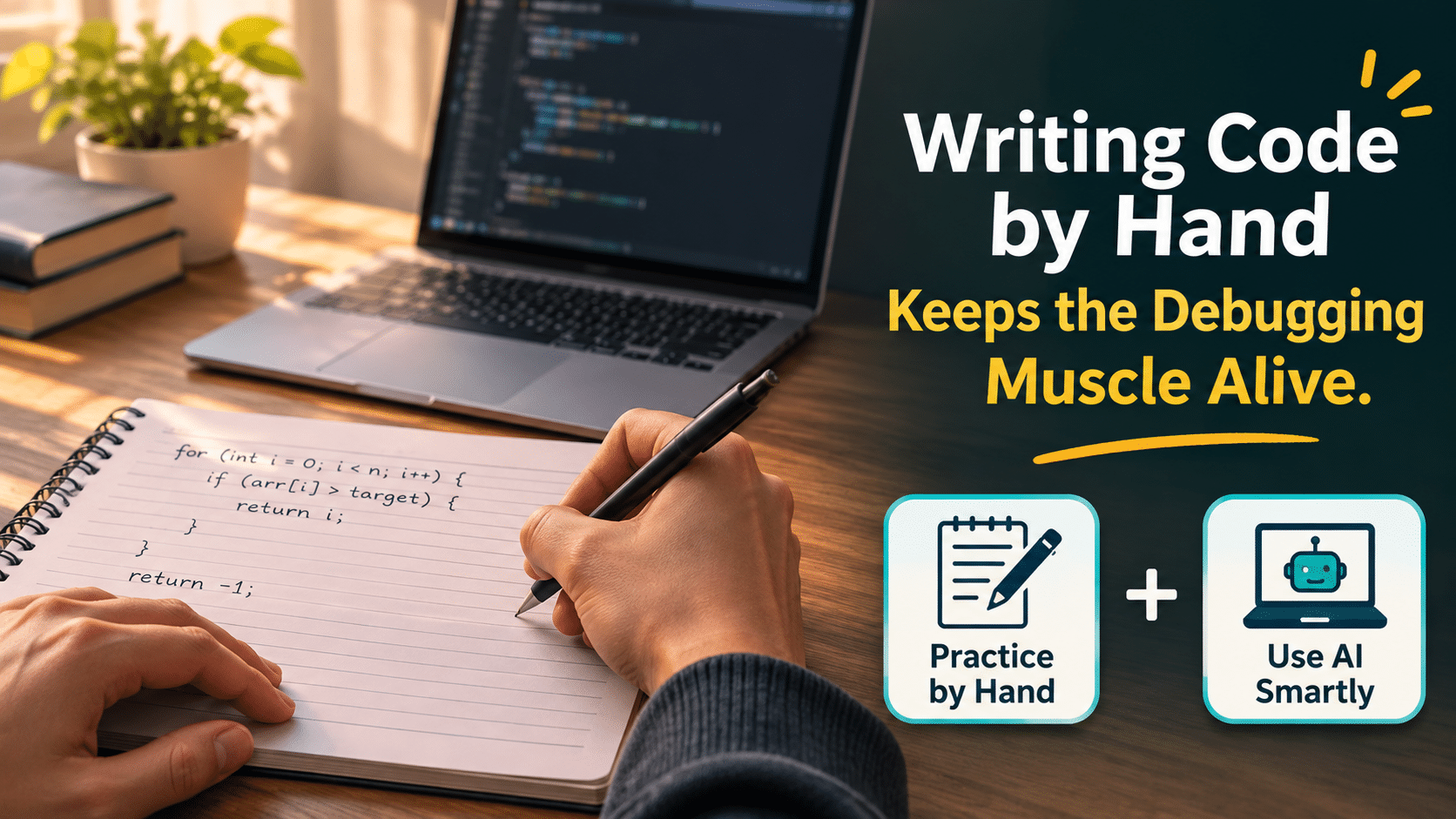
- Write the tricky parts by hand sometimes, especially when learning something new. Getting stuck is where the learning happens.
- Ask the AI why, not just what. Make it explain the code before you accept it.
- Read every diff like it came from an intern you like but don’t fully trust. Check the logic and the edge cases, not just whether it runs.
- Run security scans and real tests on AI coding output, every time. A green checkmark from the AI itself is not a test.
- Debug without AI once in a while, just to keep the muscle alive.
So where does this leave us?
We moved from typing every line, to accepting suggestions, to approving whole features written by machines. Productivity is real, and so are the risks. The human in the loop is still the most important part of the loop, but only if that human actually understands what they are approving. Start with one habit from the list above this week, and pick the one you skip most.
I’ll leave you with the thought that keeps coming back to me every time I press approve.
Are we getting dumber and heading back to the stone age? Or are we just learning a new kind of smart? Tell me in the comments which side you are on.
Frequently asked questions
Will AI replace software developers?
Not fully, at least for now. AI coding handles more of the typing, but someone still has to decide what to build, review the code, catch security issues and take responsibility when things break. The role is shifting, not vanishing.
What does human in the loop mean in software development?
It means AI does most of the generation work, like writing code, tests or pull requests, while a human reviews, corrects and approves it before it ships. The human stays accountable for the final result.
Is AI generated code safe to use in production?
Only after review and testing. Veracode’s 2025 report found 45% of AI code samples it tested had known security flaws, so always run tests, code review and security scans before merging.
Does AI coding make you a worse programmer?
It can if you only copy the output. Anthropic’s 2026 study found AI users learned less, but people who asked for explanations and conceptual help kept most of their learning. How you use it matters.
What is vibe coding?
Vibe coding is describing what you want in plain language and accepting what the AI builds without closely reading the code. It’s great for quick prototypes but risky for serious software.
Should beginners learn to code without AI first?
It helps to write and debug code by hand while learning the basics. Use AI as a tutor that explains things, not as a shortcut that does the work for you.