
Rich traditions rise and fall across the long stretch of literary history and each era leaves a trail of stories that shape fresh paths for writers. An e library archive offers a wide window into these shifting styles and gives readers space to see how old voices spark new ideas.
Waves of storytelling often collide in one vast online shelf. This blends old craft with fresh vision and shows how movements echo into the present. In this open flow the convenience of z-library keeps readers coming back for more and this easy rhythm turns complex study into a calm daily habit.
Also Read | Optimizing Digital Content
Doors Into Classic Currents
Romantic writers poured raw feeling into every line and their work still draws steady interest. An e library collection holds novels that roam through storm filled landscapes and poems that chase inner fire. This helps readers trace how passion shaped plots and how writers leaned on nature to mirror fragile human hopes.
Modernist voices broke familiar forms with bold steps. Their work bent time shifted focus and searched for truth through shattered patterns. A wide online archive holds works like “Mrs Dalloway” and “The Waste Land” and shows how these experiments pushed fiction toward new horizons. Fresh readers often spot how these daring moves inspired later styles in poetry and prose.
A midpoint in this long arc opens a door to several key ideas that guide deeper study:
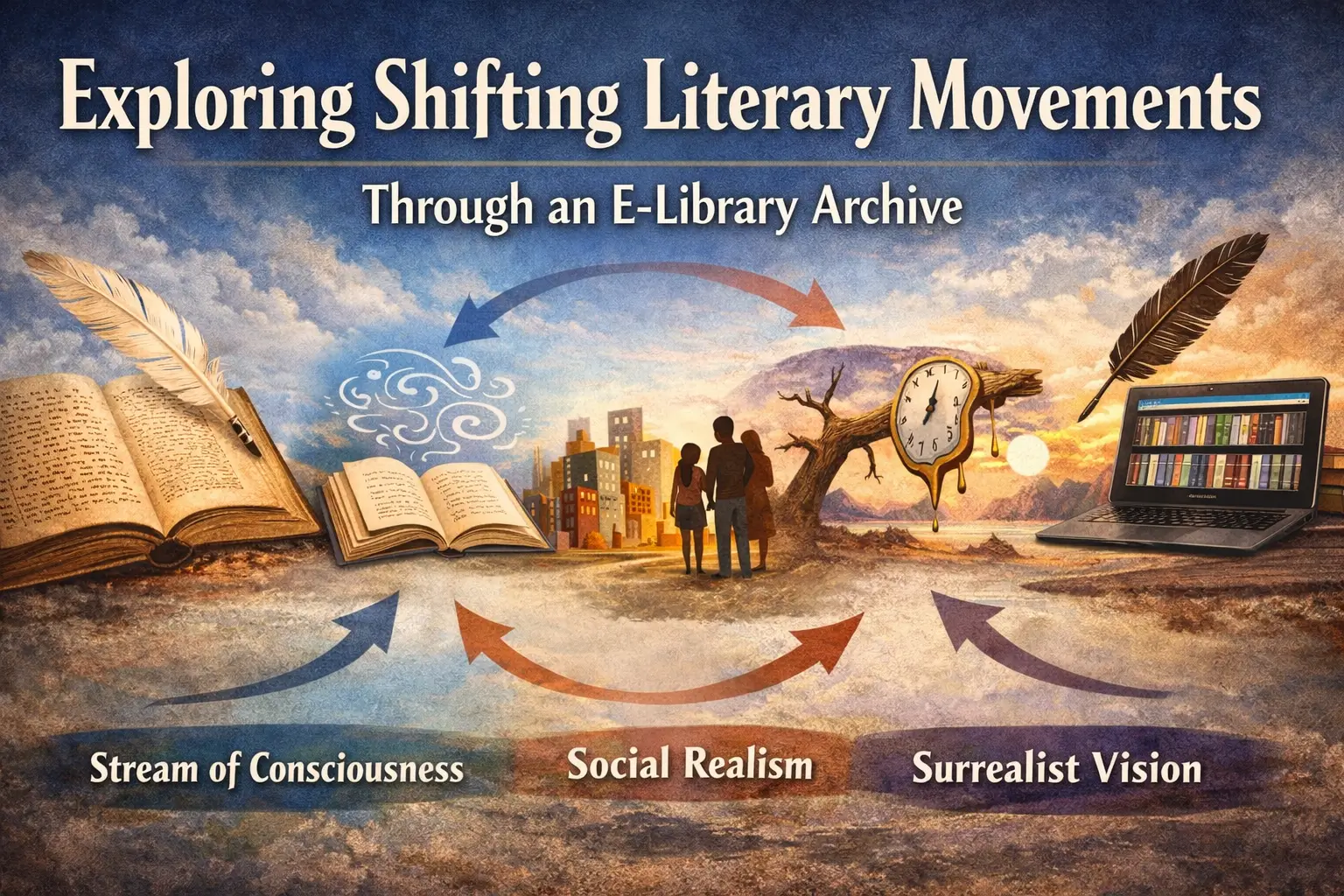
- Stream of Consciousness
Writers in this style let thoughts spill across the page in restless waves. This taps into private inner motion and reveals how fragile memory can be. Many readers find this both intense and inviting since it feels close to real thought. An online shelf allows fast shifts between authors who refine this technique and helps new minds follow each twist without losing ground. The steady jump from one voice to another builds a sense of shared discovery among different movements that cross paths over time.
- Social Realism
This movement aims to show everyday life without soft edges. Characters face work strain family tension and street level struggle. An e library lets readers compare early works with later voices who add sharper detail. This highlights how stories evolve while keeping the same core focus on real life. Many find it helpful to see how writers use precise scenes to reflect broad social change and how these scenes grow richer over decades.
- Surrealist Vision
This approach sets reason aside and lets dream logic rule. Strange images appear out of nowhere and shape meaning through bold leaps. In a single session a reader can scan through poems stories and essays that twist reality. Seeing many examples helps build comfort with this wild style and reveals how it influenced modern fantasy and experimental fiction.
These strands mingle across eras and show how writers search for new forms in order to break old fences. Many readers move between these movements through one steady route and some discover new guides through https://z-lib.pub while exploring unfamiliar texts. This wide access builds a habit of slow thoughtful reading that fits into the push and pull of daily life.
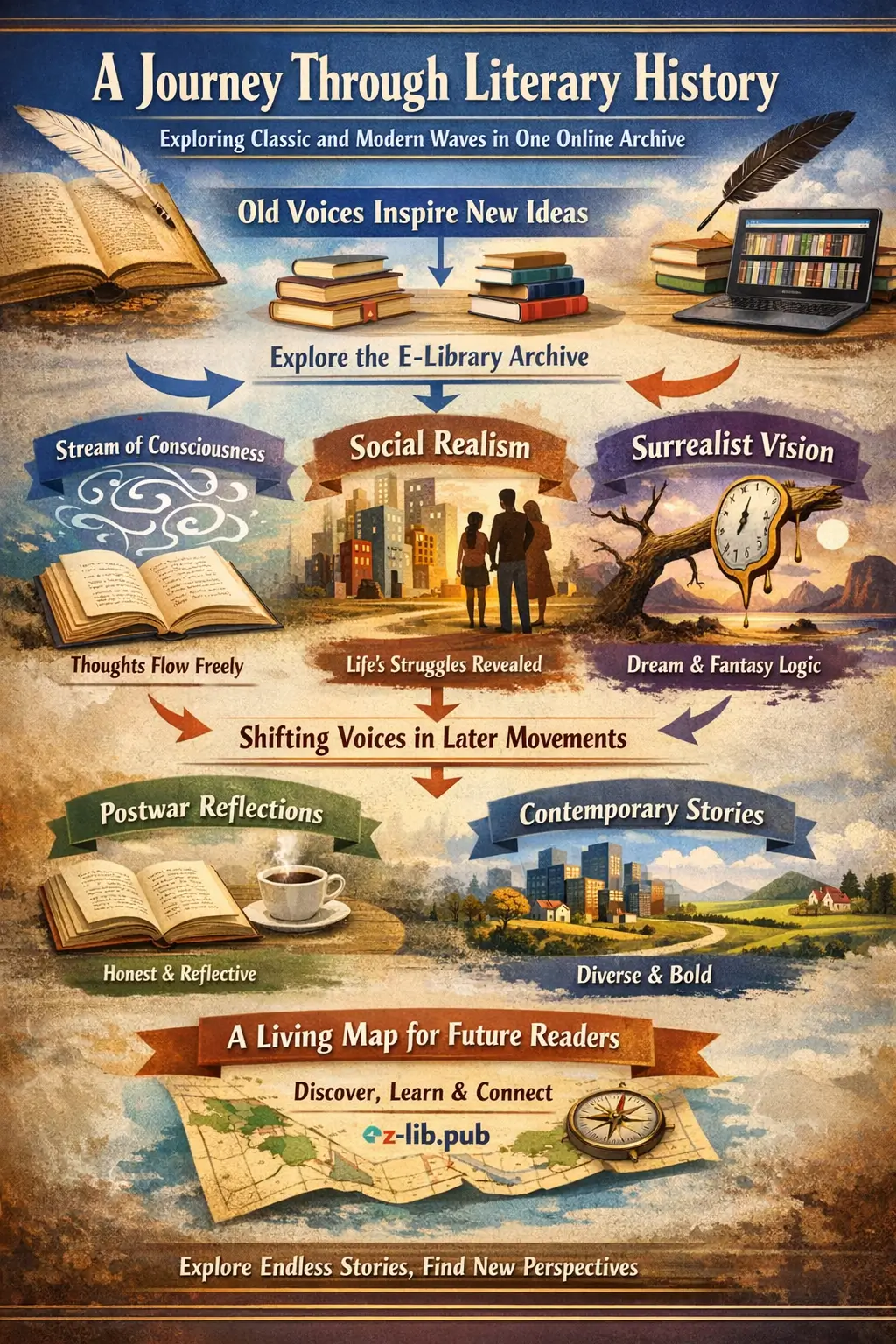
Shifting Voices in Later Movements
Postwar fiction often blends stark honesty with quiet reflection. Writers look at fear hope and identity through plain language and steady pacing. An e library archive lines up these works so readers can trace how different cultures answered the same hard questions.
Contemporary movements widen the frame. Urban tales sit beside rural memoirs. Graphic stories stand near lyrical essays. This mix shows how modern voices reshape old lessons and weave them into bold experiments.
Also Read | How AI Generated Content is Changing Content Creation
A Living Map for Future Readers
Each movement forms a thread in a larger tapestry. When placed side by side these threads reveal a map of human stories that grows brighter with each new piece. An e library lets curious minds follow the trail at their own pace and discover fresh angles that keep literature alive in every season.
Why Digital E-Libraries Are Changing How We Explore Literary Movements
Literary movements no longer live in isolated chapters of history. Digital e-libraries place entire eras side by side, allowing readers to experience how styles rise, clash, and reshape one another in real time. This shift turns literary exploration into an active journey rather than a linear lesson.
One major change is instant context. Readers can move from Romantic intensity to Modernist experimentation within minutes, clearly seeing how emotional expression gave way to fractured structure and new narrative forms. These rapid transitions make connections visible that traditional study often hides.
Digital archives also encourage comparison over memorization. Instead of focusing on a single author, readers naturally compare voices across movements, cultures, and decades. Stream-of-consciousness techniques, social realism, and surrealist imagery reveal their evolution more clearly when viewed together.
Another advantage is frictionless reading. E-libraries fit into small moments of daily life, making challenging works easier to approach. Short reading sessions reduce pressure and gradually build familiarity with complex literary ideas, turning exploration into habit rather than obligation.
Most importantly, digital e-libraries keep literary movements alive and relevant. Classic works gain new meaning when read through modern perspectives, while contemporary writing draws strength from older forms. This continuous exchange ensures literature remains a living map, open to new interpretations and future voices.
Quick Summary
Literary movements do not exist in isolation. Each era borrows, reacts, and reshapes what came before it. From Romantic passion to Modernist experimentation and contemporary hybrid forms, literature evolves through constant dialogue.
Digital e-libraries make this evolution easier to explore. By placing multiple movements side by side, they help readers spot patterns, compare voices, and engage with complex ideas at their own pace. This access turns literary history into a living, ongoing experience rather than a static record.
For modern readers, e-libraries offer more than convenience. They create space for slow, thoughtful reading that fits into everyday life, keeping classic and modern literature connected, relevant, and alive.