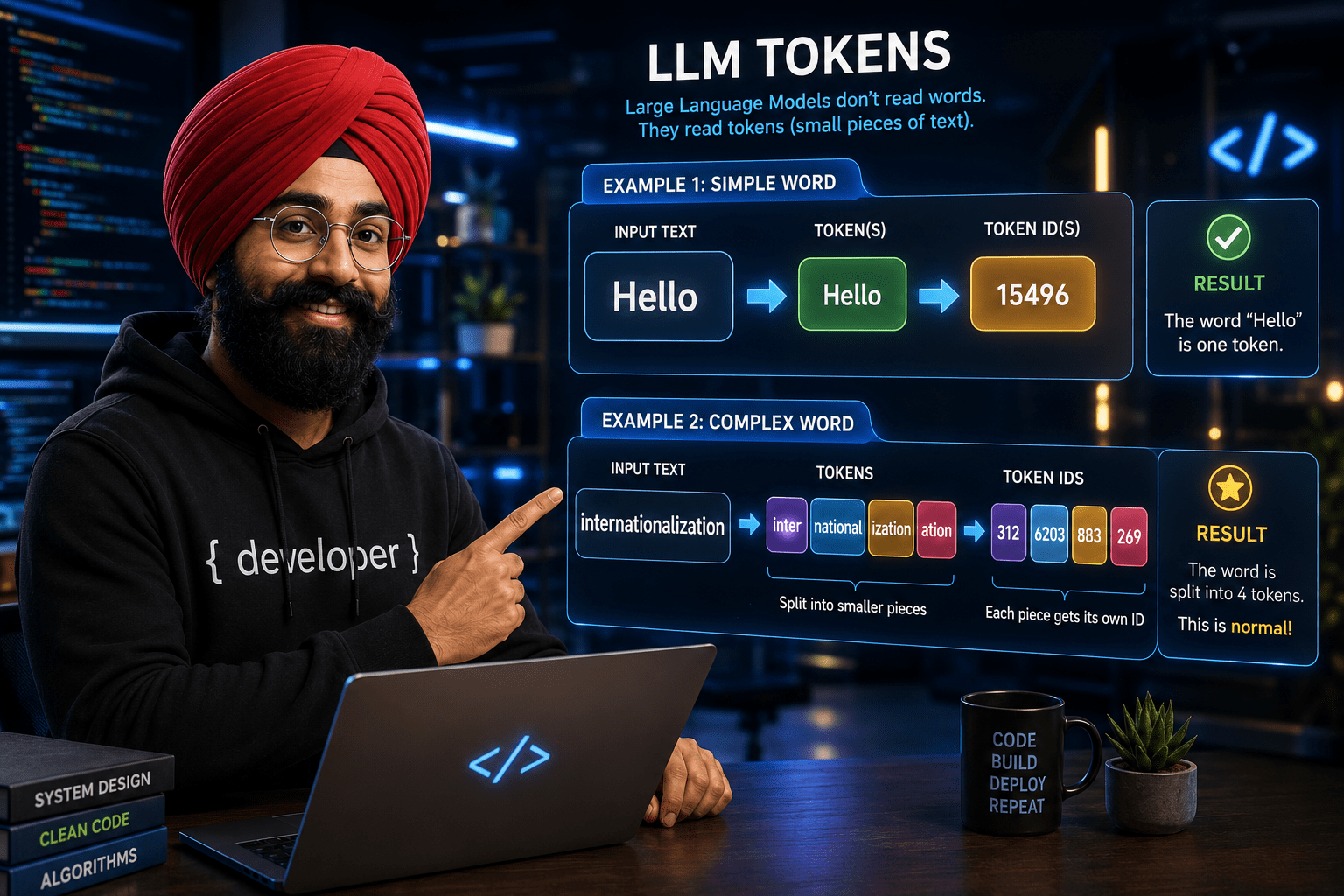

If you have worked with tools like ChatGPT, Claude, Grok, or other AI models, you have probably heard the word tokens. But what exactly are they, and why should you care?
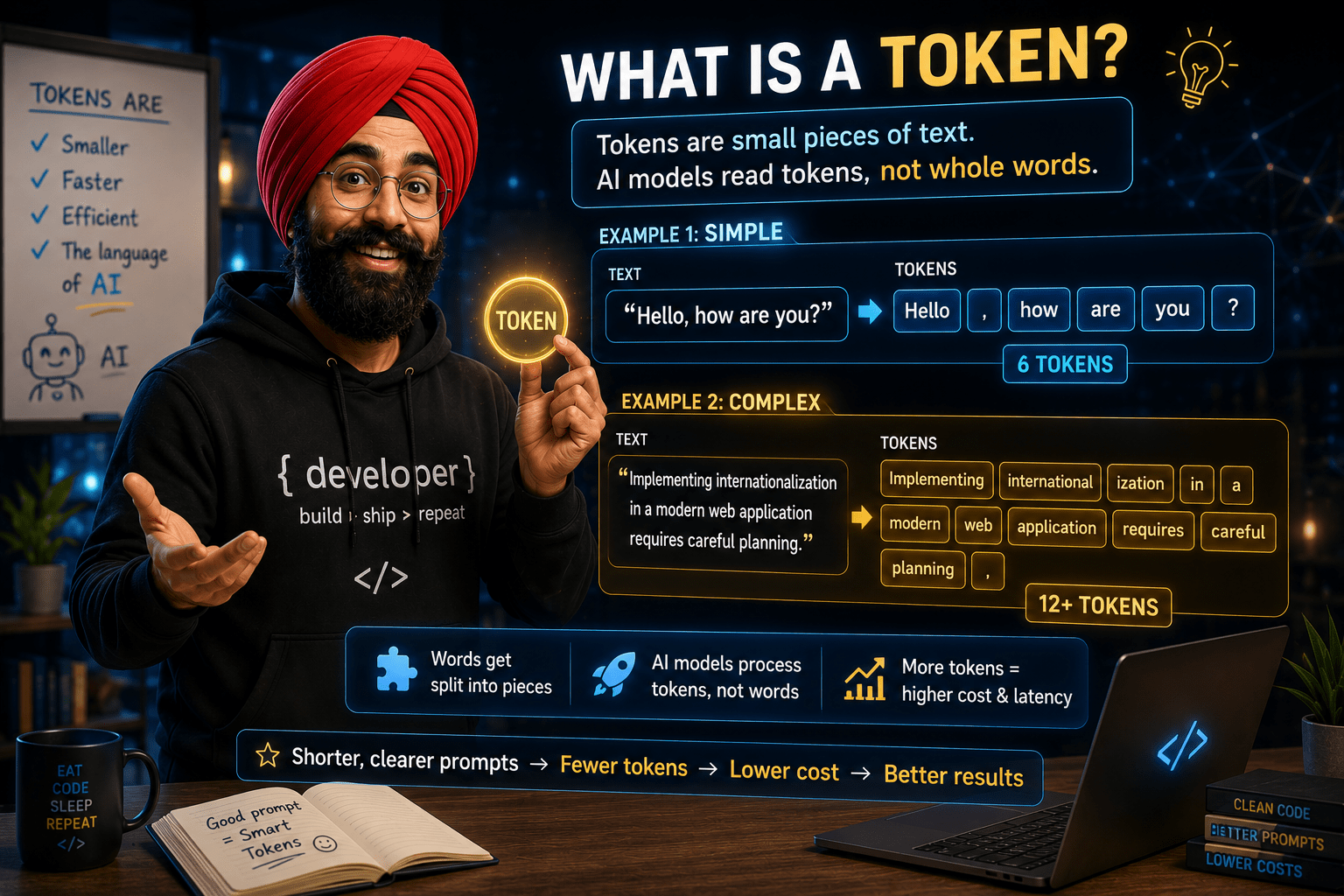
Tokens are the basic building blocks that large language models use to understand and create text. They are not exactly the same as words. Sometimes one word equals one token. Other times, a word gets split into smaller pieces.
Understanding tokens helps you write better prompts, control costs, and get more reliable results from AI models. Let us break it down simply.
How Tokens Actually Work
Imagine the model reads text like a person reading a book, but instead of seeing whole words, it sees small chunks called tokens.
For example:
- The word “developer” might be one single token.
- A longer word like “internationalization” could be split into three or four tokens.
Punctuation, spaces, and even numbers also count as tokens. Common words and phrases usually stay together, while unusual or long words get broken down.
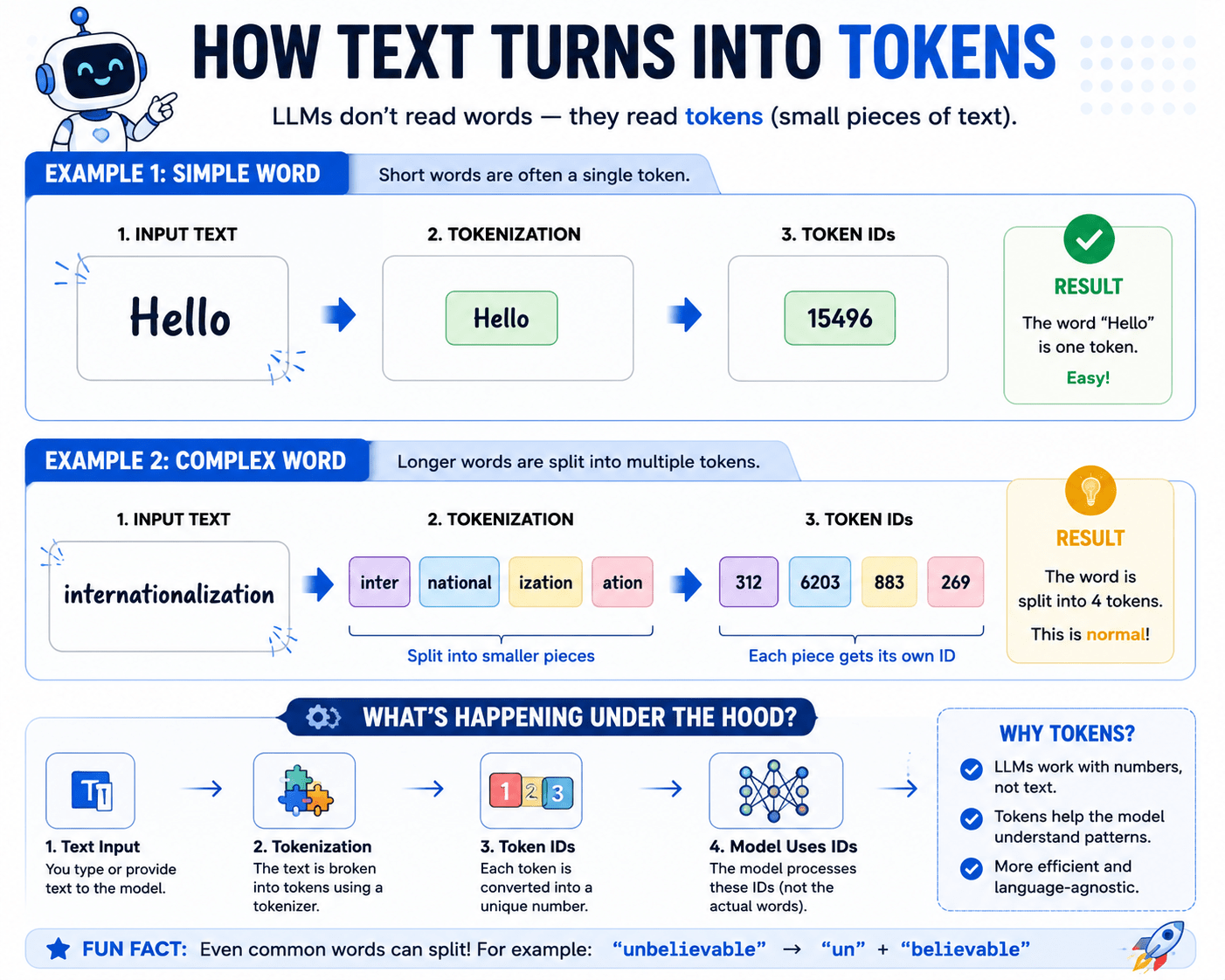
Different AI models use slightly different ways to split text into tokens. This is why the same sentence can use a different number of tokens depending on which model you choose.
Why Tokens Matter for Developers
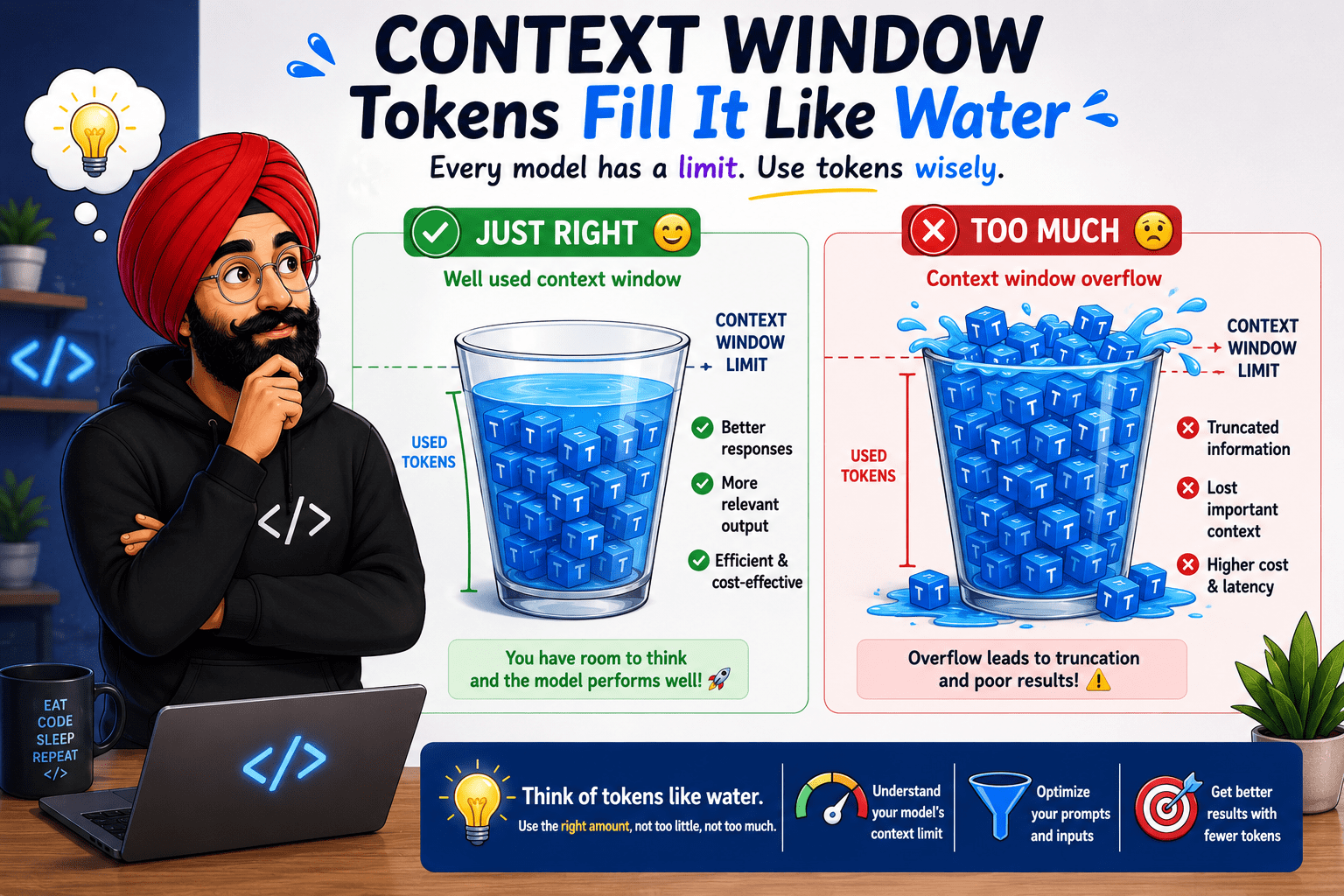
Every time you send a prompt to a model and get an answer back, you are charged based on the total number of tokens used.
More tokens mean:
- Higher cost
- Slower response time
- Sometimes lower quality if the context becomes too large
On the other hand, smart use of tokens can help you save money and get faster, better answers.
Real Examples of Tokens in Action
Let us look at some simple examples:
Example 1 – Short Sentence
Text: “Hello, how are you today?”
Tokens: Roughly 6 to 8 tokens (depending on the model)
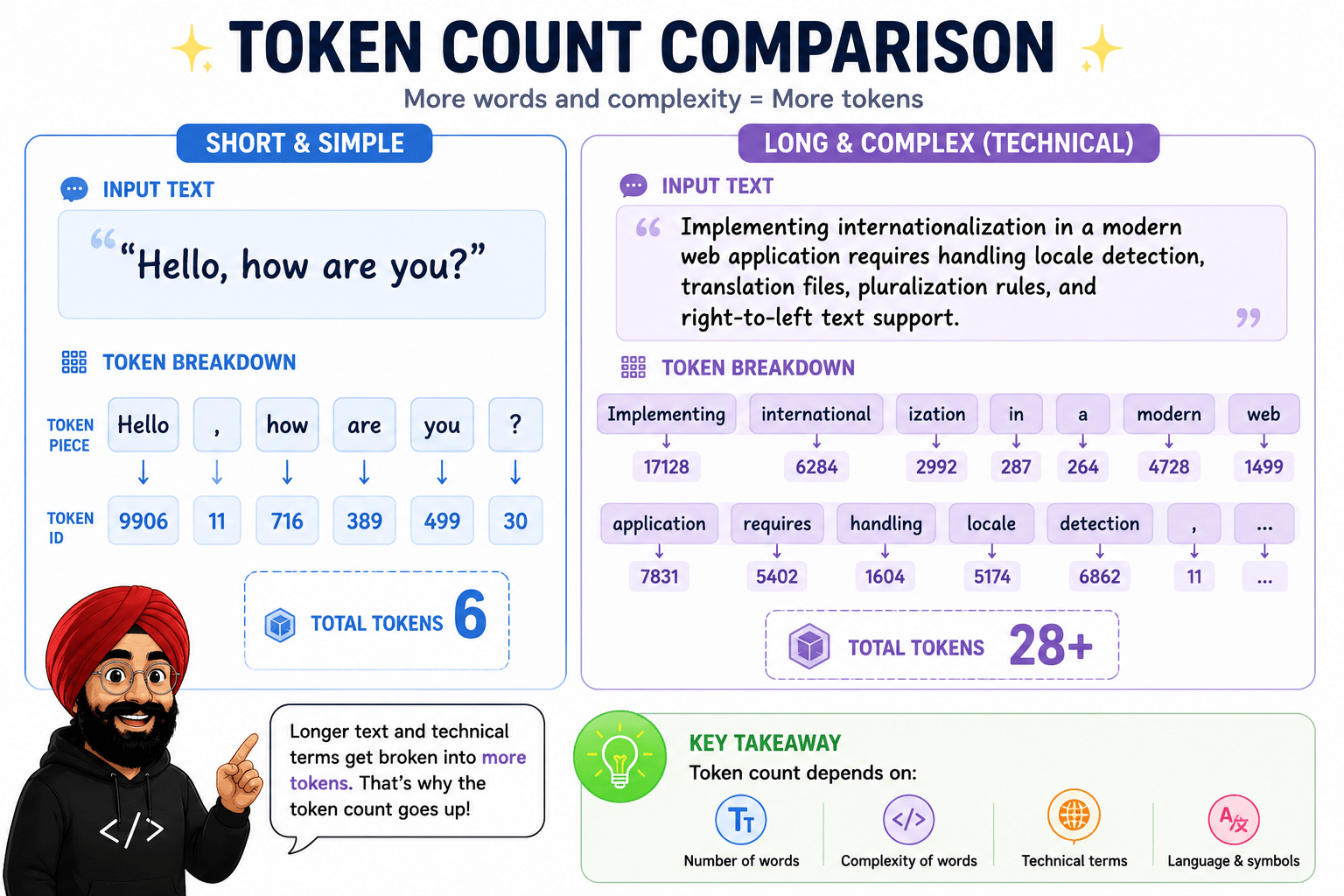
Example 2 – Longer Technical Text
Text: “The new features in Java 26 improve performance for artificial intelligence workloads.”
Tokens: Around 15–20 tokens
You can see that technical or longer content quickly uses more tokens.
Tokens and Context Windows & How They Connect
Tokens fill up the model’s context window. The context window is the maximum amount of information the model can handle in one conversation.
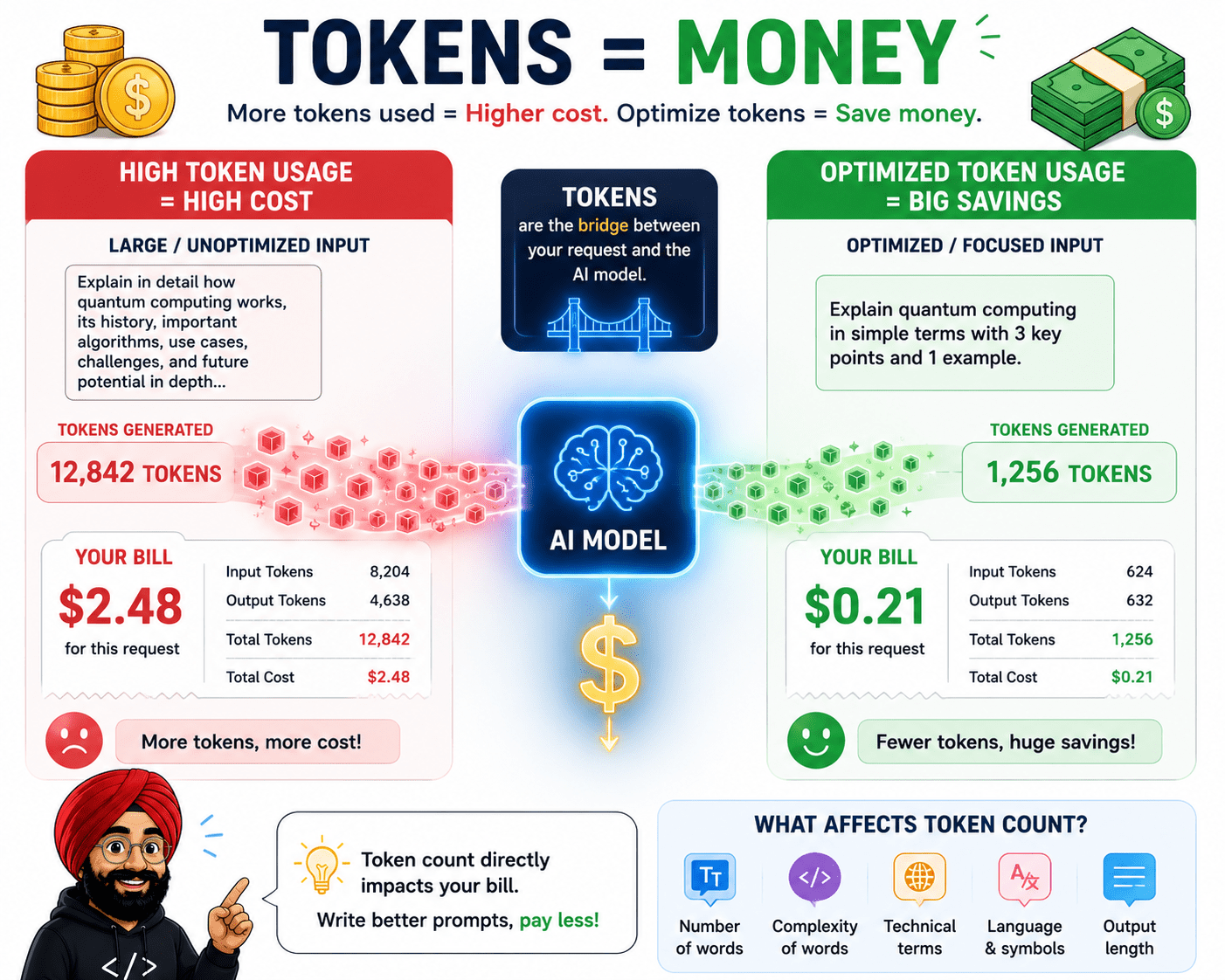
If your prompt plus the conversation history exceeds the limit, the model may forget earlier parts or give poorer answers. This is why keeping prompts clear and concise is so important.
Practical Tips to Manage Tokens Better
Here are some easy things you can do right away:
- Write shorter and clearer prompts when possible.
- Remove unnecessary details or repeated instructions.
- Ask the model to give short answers when you do not need long explanations.
- Use structured formats like bullet points or JSON to control output length.
Many developers save 30 to 50 percent on costs just by being more careful with how they write prompts.
Common Questions About Tokens
Does one token always equal one word?
No. On average, one token is about three-four characters or roughly three-quarters of a word in English.
How can I check how many tokens my prompt uses?
Most AI platforms show the token count before you send the request. There are also free online token counters available.
Are tokens the same in every model?
No. Different models like GPT, Claude, Grok, or Llama use their own tokenizers, so counts can vary.
Conclusion
Tokens are one of the most important concepts to understand when working with large language models. Once you know how they work, you can write better prompts, reduce costs, and get more consistent results from AI tools.
Start paying attention to token usage in your daily work. Small improvements add up quickly, especially when you build applications that make many AI calls.
In the next posts in this series, we will explore context windows and prompt engineering in more detail.