

Understanding System Integration: 5 Types That Every Business Needs to Know
There is two forms of communication in every company, which includes communicating with other companies and communicating internally. System integration enables both of these processes. In case you have ever used an application that fetches data automatically from another application, you have been using system integration unknowingly.
Also Read: creative fabrica studio desktop review
In this article, the concept of integration is explained; the five approaches towards integrating the system and the problems faced during the process are discussed
What Is System Integration?
System integration is the method of integrating sub-systems and tools into one system for seamless interaction. In this case, the organization does not use independent software that interacts with no other system, but integration helps to integrate IT processes, platforms, and services by sharing information between them.
The purpose of using system integration by organizations is increasing efficiency and reducing costs. As a result of integrating internal systems, information exchange happens quickly and there is no need to transfer data manually. The process of system integration does not refer to internal use only; it also covers external connections to partners and vendors of the company.
5 Types of System Integration
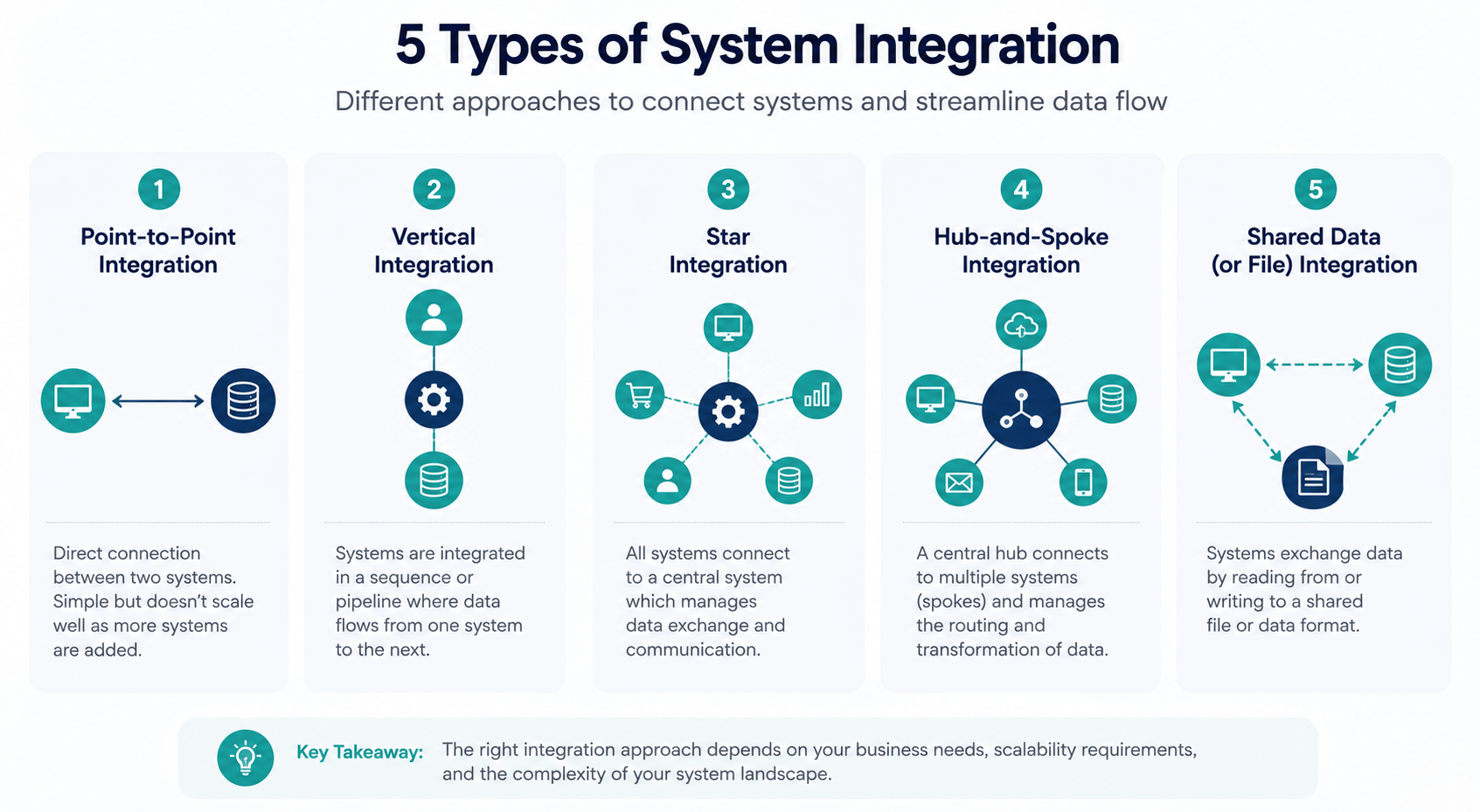
There are five commonly used approaches to system integration, each with different tradeoffs in complexity and long-term maintainability.
1. Point-to-Point Integration
Point-to-point integration links two and only two systems directly, with no overarching structure overseeing the process. It’s straightforward and performs one thing at a time, which explains why it can’t be referred to as system integration on its own. Several cloud-based software packages provide their users with point-to-point integration capability; however, the use of this method isn’t effective when it comes to linking multiple systems.
2. Vertical Integration
The vertical integration approach divides the sub-systems into functional modules, which are created from bottom up to carry out a particular function. It is simple to create this type of system when a few interrelated systems are involved. However, the limitation comes in when you want to add another function since each new function will need its own distinct structure created from scratch.
3. Star Integration
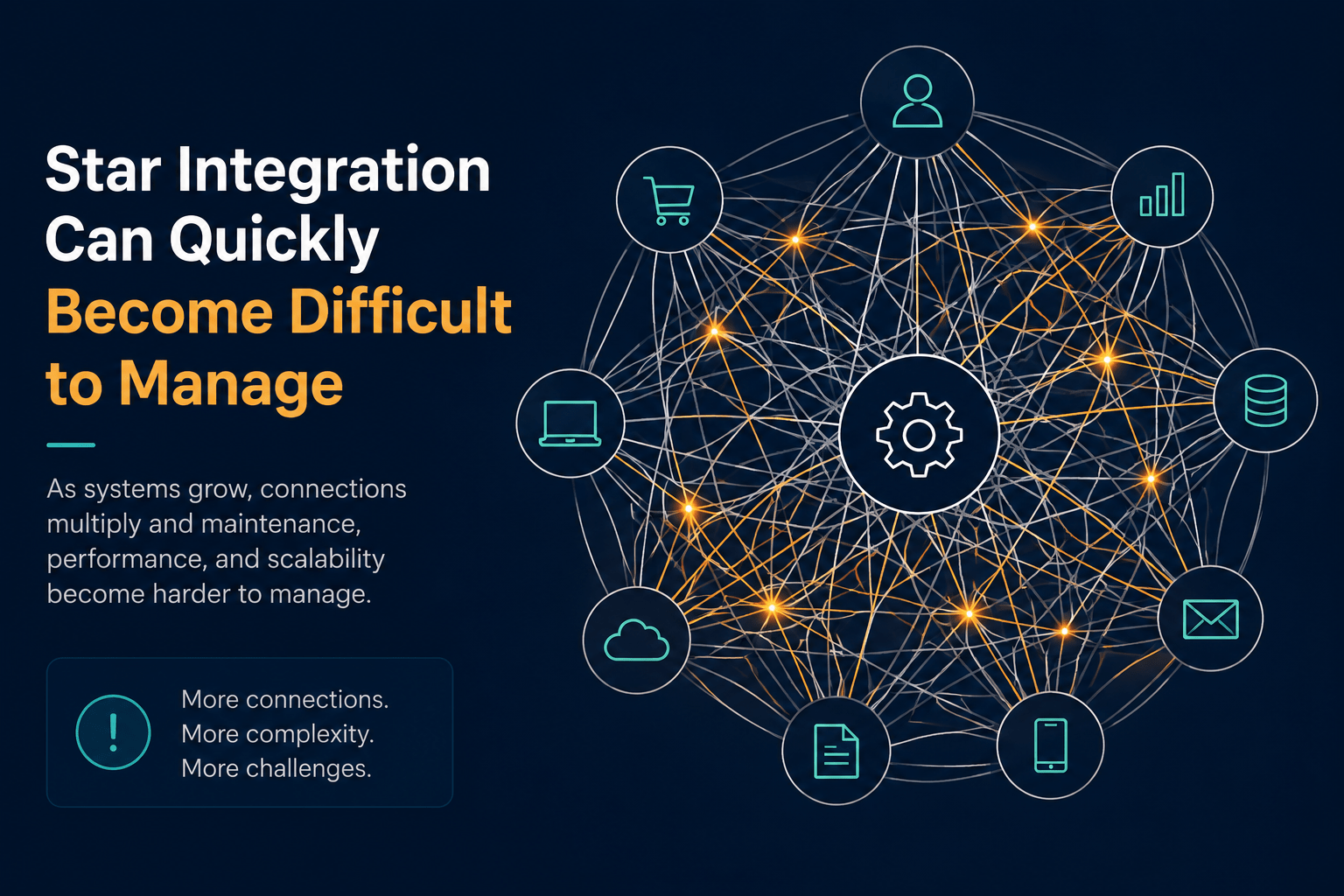
Star Integration, otherwise known as spaghetti integration (for a very good reason), involves direct integration of all sub-systems with each other. It works fine on a smaller scale, but the amount of connections needed becomes exponential. In order to connect 10 sub-systems using this method, there will have to be about 45 connections built, and changing even one of the sub-systems means re-building connections with the other 9.
4. Horizontal Integration
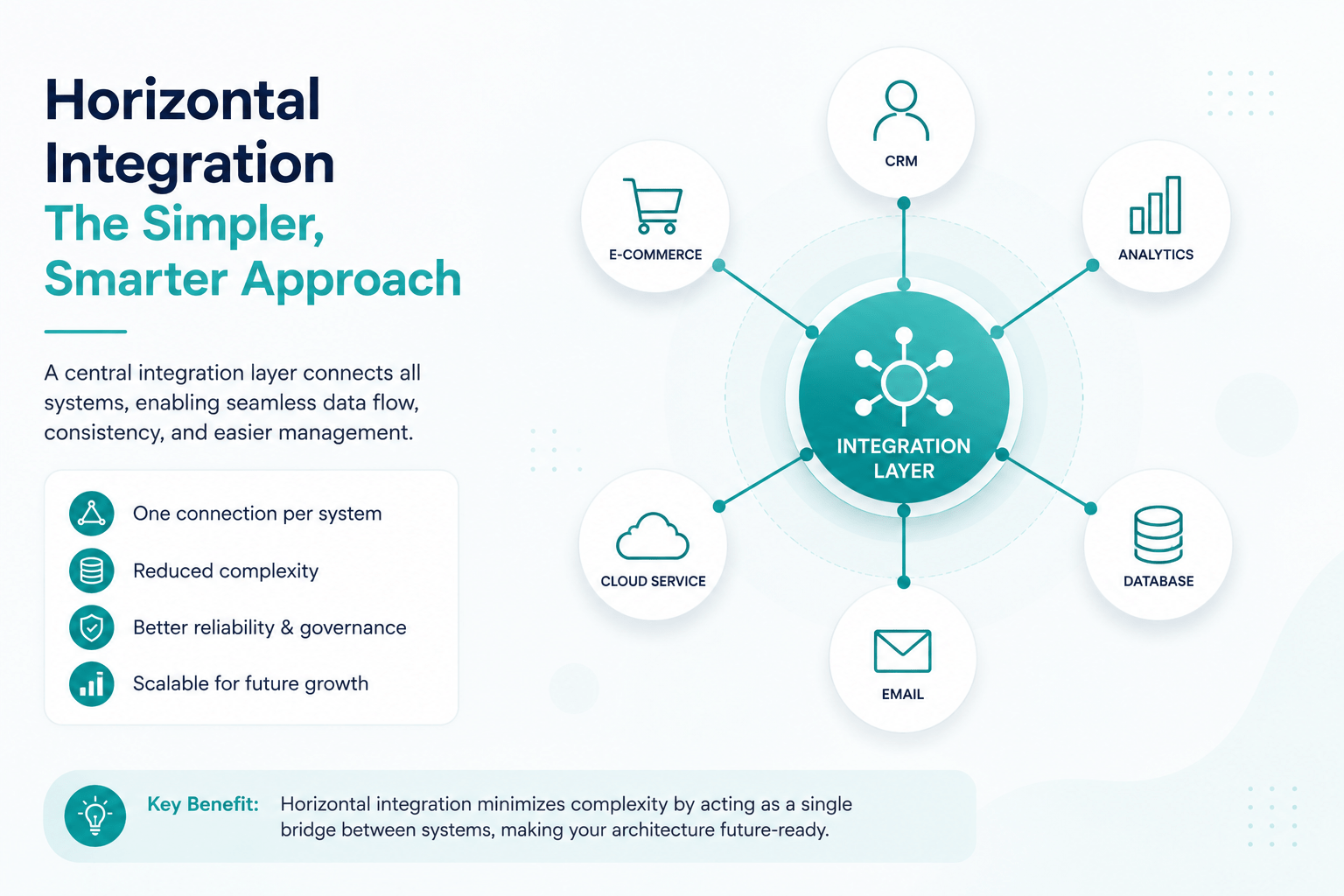
Horizontal integration sends all the sub-systems through one common interface layer that is usually referred to as an Enterprise Service Bus (ESB). Instead of having each individual sub-system connect to each individual system, all of them connect to one common layer. Thus, for ten systems, ten connections will suffice rather than 45. The real benefit of this is the ability to upgrade a single sub-system independently of the others.
Also Read: reusable prompt templates for developers
5. Common Data Format Integration
Whenever there is a difference in the data formats used by systems, there is always the need for the data to be translated from one format to another whenever movement takes place. In star integration, the translation has to take place individually between each of the systems. The solution to this problem is found in common data format integration where translation takes place using one common standard format.
Quick Comparison of Integration Types
Integration Architecture Comparison
Comparing connection strategies for 10 systems
| Integration Type | Connections Needed (10 systems) | Best For |
|---|---|---|
|
P2P
Point-to-Point
|
Varies, ad hoc | Small, one-off connections |
|
V
Vertical
|
Low, but siloed | Simple, narrow use cases |
|
★
Star
|
Up to 45 | Small systems only — doesn’t scale |
|
ESB
Horizontal (ESB)
|
10 | Growing, multi-system environments |
|
CDF
Common Data Format
|
10 (conversions) | Systems using different data formats |
What Does a System Integrator Actually Do?
A System Integrator (SI) is organization or expert who handles IT systems integration planning, implementation, testing, and maintenance. Examples of well-known SI companies are Deloitte, IBM, Accenture, and TCS; these usually undertake big projects that involve several vendors.
Also Read: buy first crypto beginners guide
The job of the system integrator is involved not only in basic point-to-point integration but also includes complex many-to-many integrations involving both internal and external partners. In addition to technical implementation, they also take care of the maintenance part and serve as a resource for companies that lack the knowledge to do integration internally.
Common System Integration Challenges
Integration is not difficult from a theoretical perspective; however, implementation can be tough. Integration projects are notoriously doomed, and complexity is not always the reason for failure. Even a small project can grow out of control because of increasing project scope during implementation.
Here is where the failures can typically originate from:
- Incorrect selection of integration technology for the systems concerned
- Incorrectly assessing compatibility problems among current systems
- Scope creep: unplanned additions to scope midway through the project
FAQ
What is the difference between system integration and software integration?
System integration is wider it covers hardware and organizational aspects, not only communication between software applications.
What kind of system integration is the most efficient?
It depends on the scale of work horizontal (ESB) is usually the most scalable way of system integration, while point-to-point can be used for a small, temporary connection.
Why does system integration often fail?
The major reason of failures is wrong choice of the method, underestimation of compatibility problems, and growth of the scope without changes to the integration plan.
Conclusion
Integration of systems enables separate systems, organizations and processes to operate in a cohesive manner rather than being independent silos. It becomes important to consider the approach to be adopted, whether point to point, star, or horizontal as the size of your business grows, therefore choosing one considering the future needs of your organization.



We use BCE Sportflix. Watch Replays of Soccer Matches , Soccer Full Matches , Sports Streaming Library , Watch Sports Videos , Watch Full Match replay of England Premier League
Nice article.
Thanks