
Prompt engineering is the skill of writing clear instructions, so AI models (LLMs) give you the exact output you want. Good prompting can dramatically improve quality while reducing token usage and cost.
In 2026, the best techniques are still based on clear communication, but models have become smarter, so you can be more efficient.
Here are the most useful techniques developers are using today.
Also Read – How Token Limits and Context Windows Actually Work in 2026
Start Simple and Be Specific
The most effective starting point is to be direct and specific.
Instead of writing a long vague prompt, clearly state what you want. For example:
- Bad: “Tell me about Java”
- Good: “Explain the new features in Java 26 that help with AI and machine learning workloads. Use bullet points.”
Specific prompts almost always give better and more consistent results.
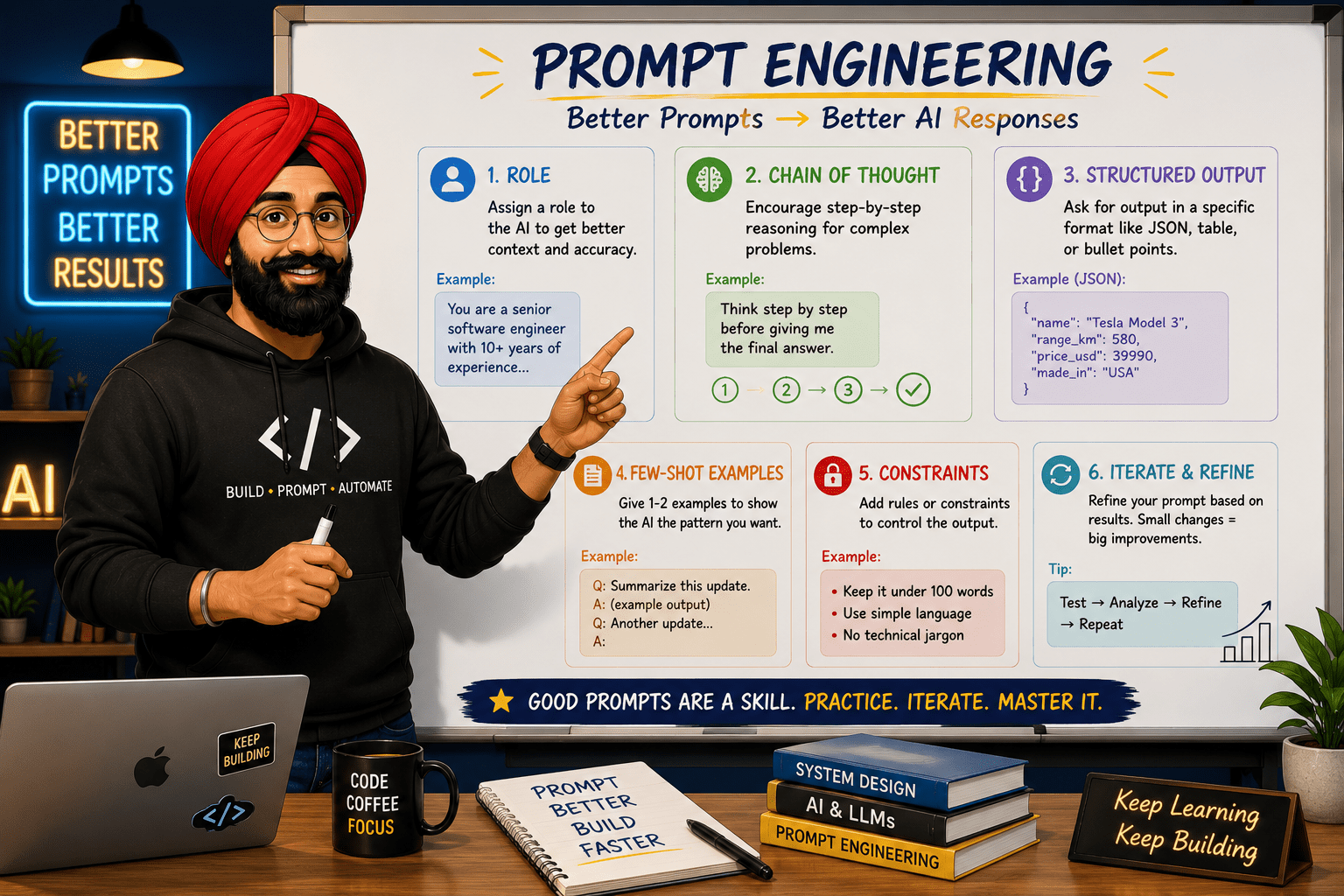
Use Role Prompting
Giving the model a clear role helps set the right tone and expertise level.
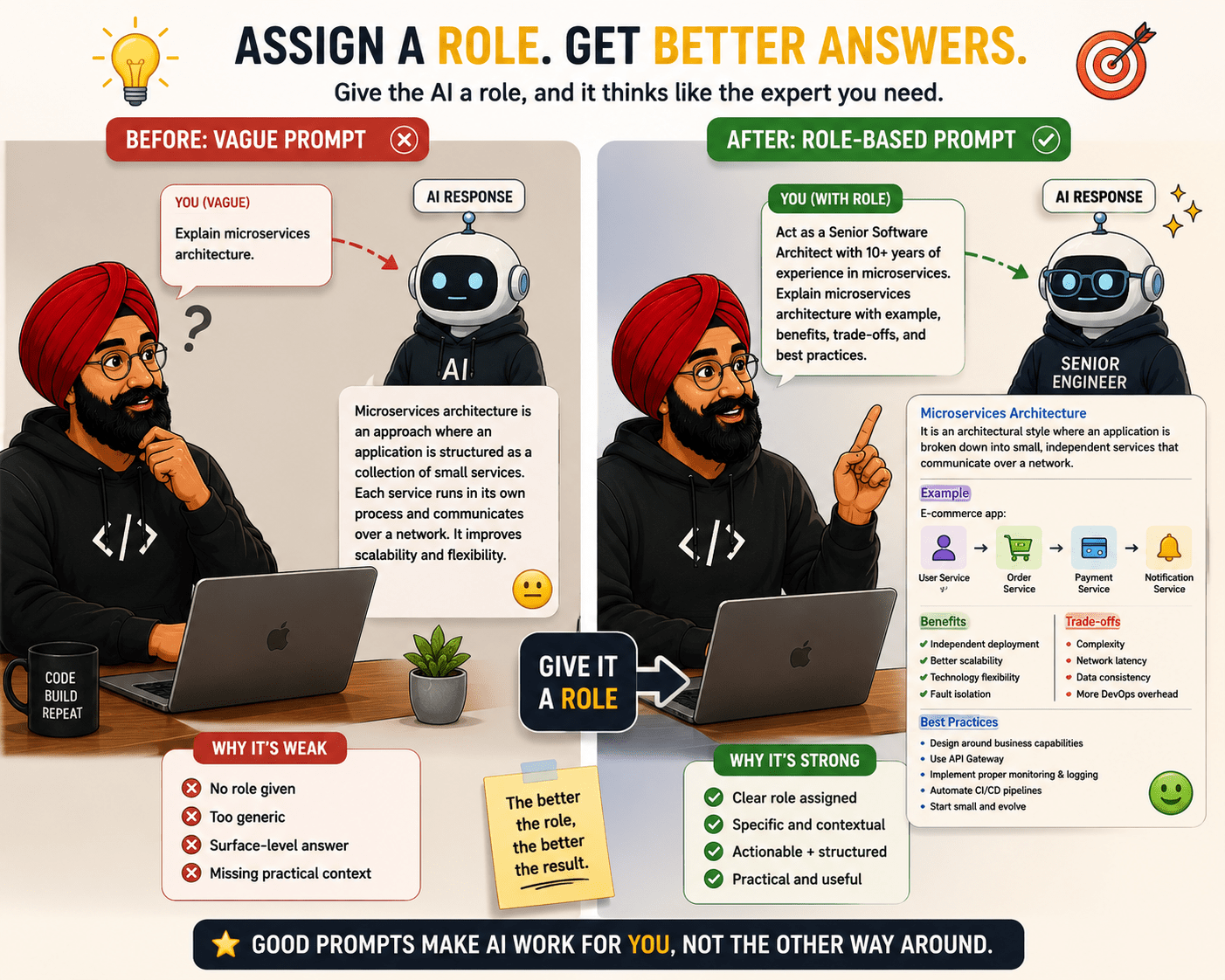
Examples of Role Prompting:
- “Act as a senior software engineer reviewing this code.”
- “Act as a technical writer explaining this concept to intermediate developers.”
- “Act as a teacher to explain concept of Trignometry”
- “Act as a Designer to generate the image”
This simple technique often improves output quality significantly.
Also Read – Understanding LLM, Context Window, Prompt Engineering Complete Guide
Chain of Thought Prompting
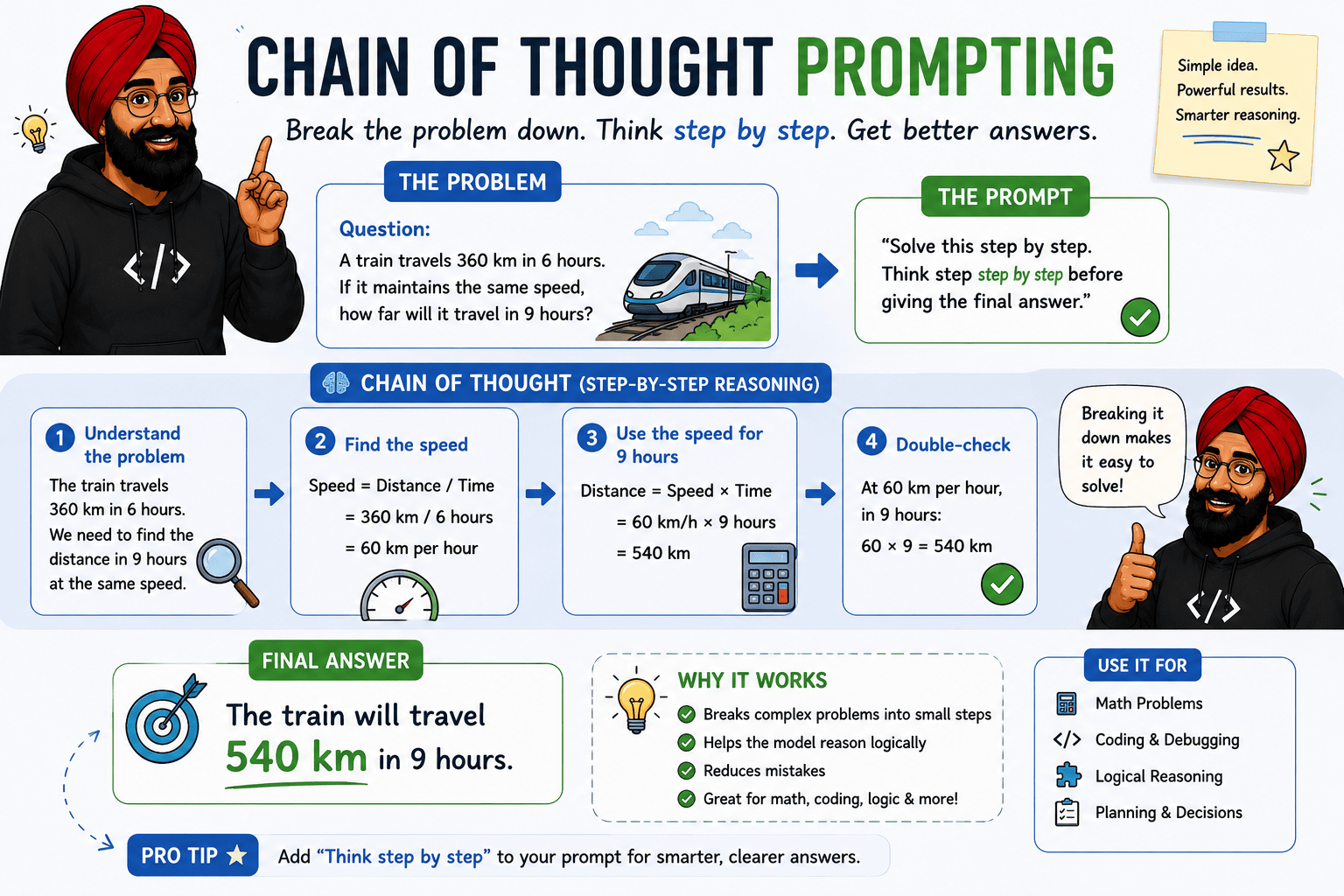
Ask the model to think step by step before giving the final answer. This is especially useful for reasoning, math, or complex problem-solving tasks.
You can add: “Think step by step and explain your reasoning before giving the final answer.”
This technique helps the model avoid rushing to wrong conclusions. This is same as what a normal person would do step by step to complete works.
Chain of thought is similar approach to get work broken down in steps and then done.
Request Structured Output
Tell the model exactly how you want the answer formatted. This makes it much easier to use the output in your applications. Like if you need bullet points, you need summary, paragraphs or short content etc.
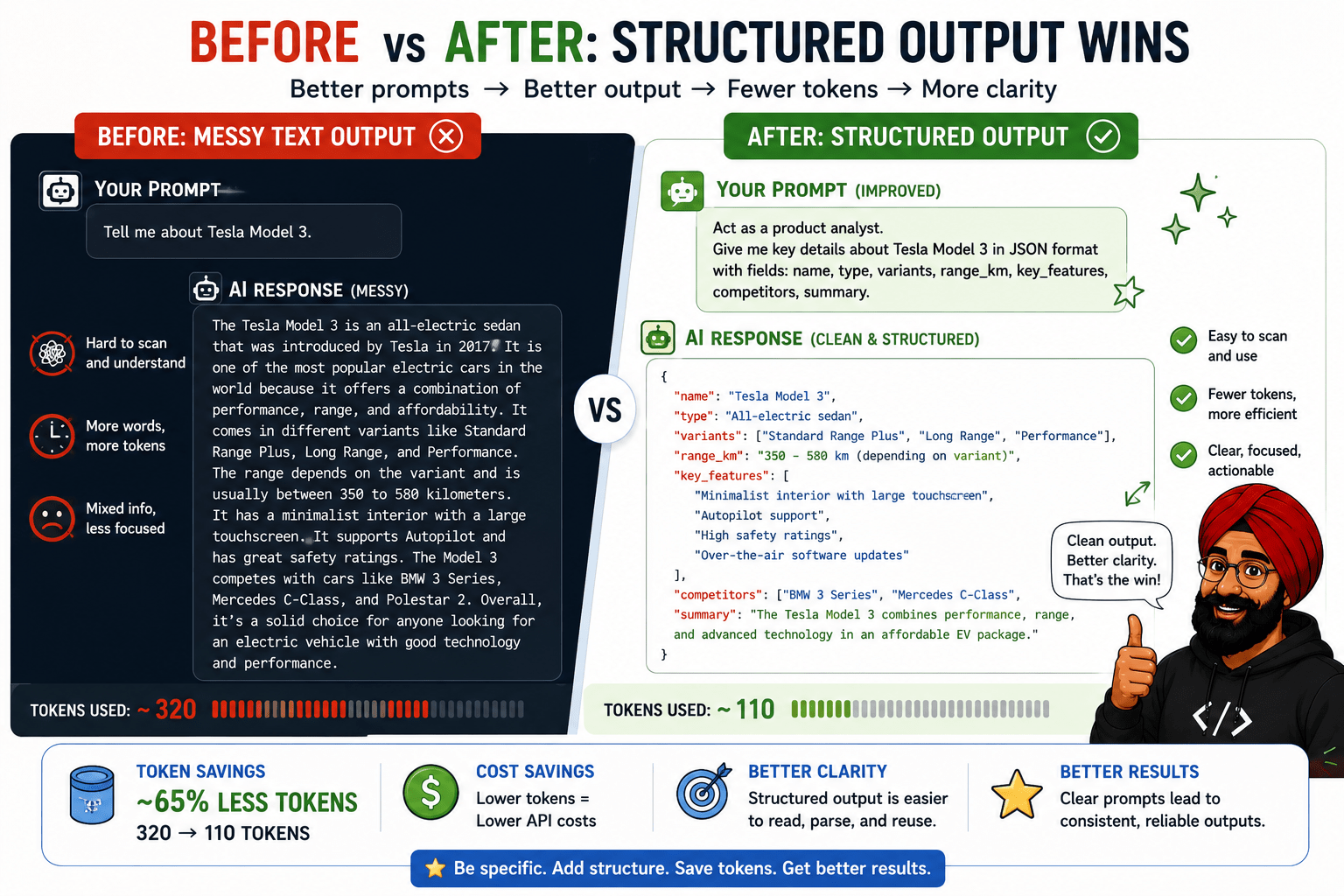
Common formats:
- Bullet points
- Numbered lists
- JSON format
- Tables
For example: “Return the answer as a JSON object with keys for summary, key points, and recommendations.”
Few-Shot Prompting (Giving Examples)
Showing the model a couple of good examples often leads to more consistent results. Like if you want to create an image, attach similar image as reference. same you can do with links and files to get desired results.
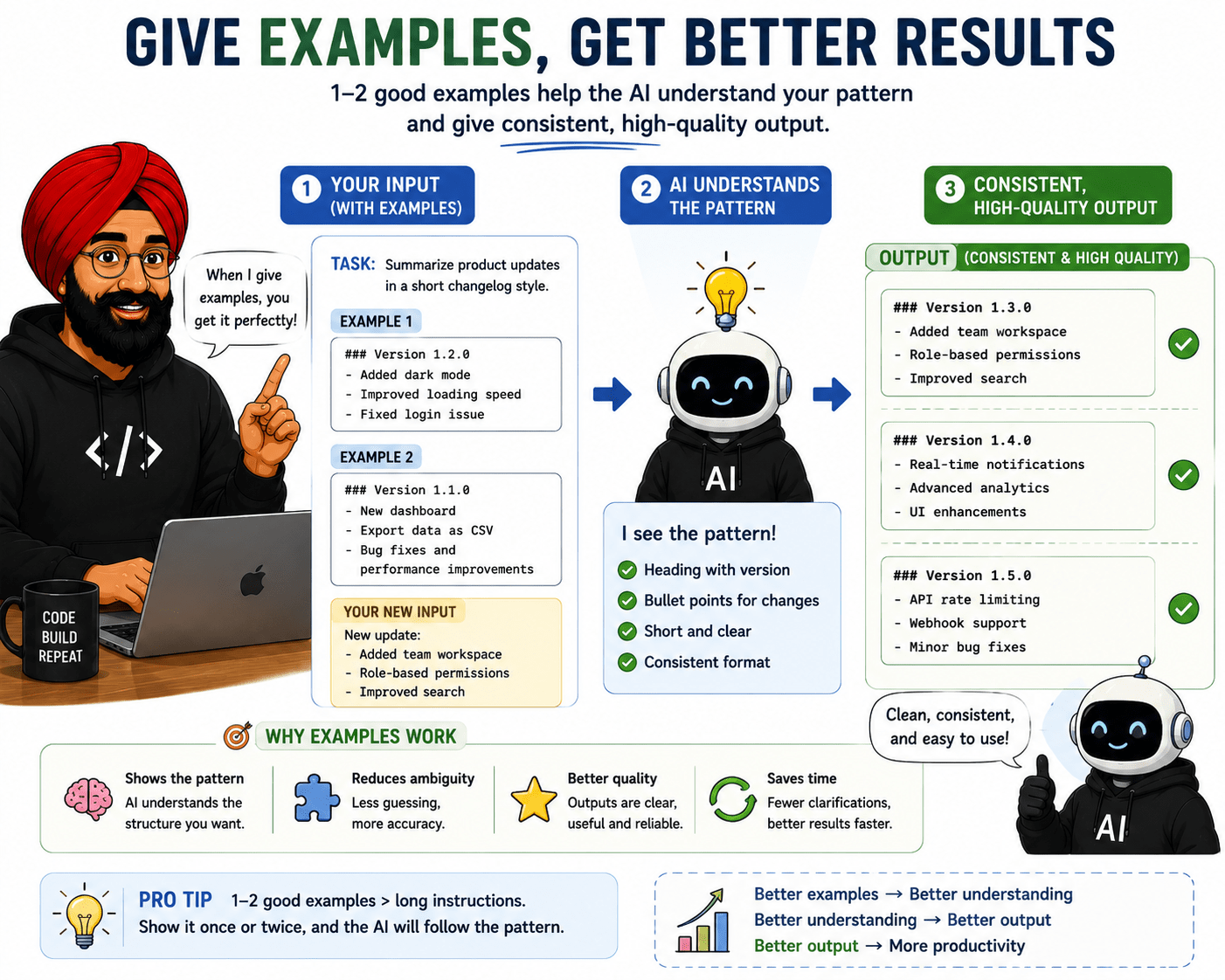
However, use this sparingly. In 2026, models need fewer examples than before. One or two high-quality examples are usually enough.
Also Read – What are Tokens in Large language Models ?
Practical Tips for Better Results
- Keep system prompts short and focused.
- Test your prompts with small inputs first.
- Combine techniques. For example, use role prompting + structured output + chain of thought together.
- Always review and refine your prompts over time.
Common Mistakes to Avoid
- Being too vague or polite with unnecessary words.
- Giving too many examples or contradictory instructions.
- Forgetting to specify the desired output length or format.
Taking a few extra seconds to refine your prompt usually saves time and money later.
Conclusion
Prompt engineering is still one of the highest return skills for developers working with AI in 2026. The techniques in this post are simple but very effective when used consistently.
Practice with your daily tasks and keep a collection of prompts that work well for you. Over time, you will get much better and faster results from every model you use.
In the upcoming posts, we will cover more advanced optimization techniques and reusable prompt templates.