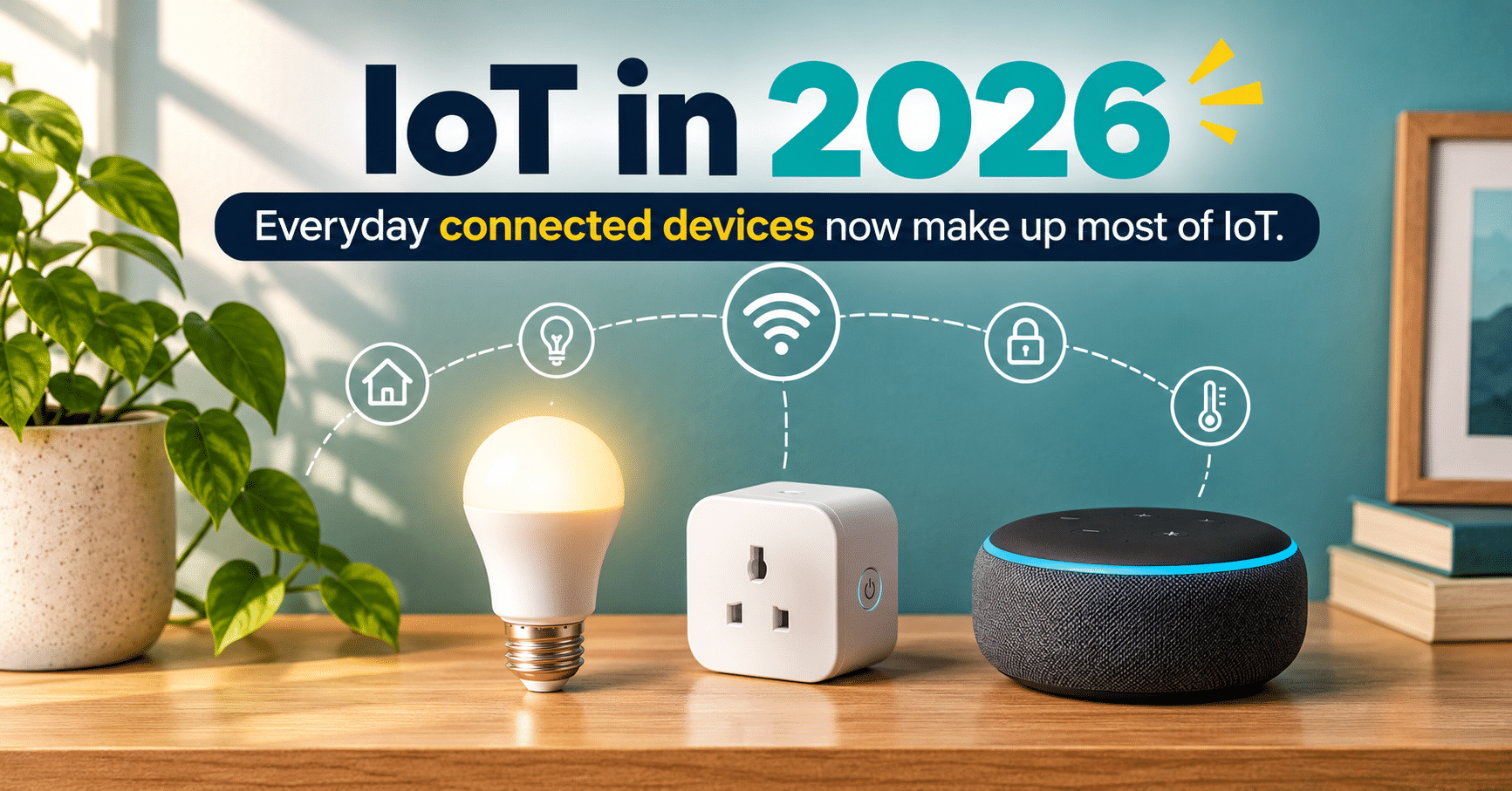

IoT in 2026 is not a buzzword anymore, and that is exactly why you stopped hearing about it. Around 2017 you could not open a tech site without reading about connected fridges, kettles and toothbrushes, and conference halls were full of slides about billions of connected things. Then crypto took the spotlight, then AI took everything, and the Internet of Things simply stopped trending.
So is IoT dead? Not even close. IoT in 2026 stopped being a buzzword and started being furniture. If you have a smart bulb, a smartwatch, a video doorbell or a car with an app, you are already living inside it. Let’s look at what actually happened.
Did IoT in 2026 Really Die, or Did We Just Stop Calling It That?
The numbers say IoT in 2026 is bigger than ever, and it grew while nobody was looking. IoT Analytics counted 21.1 billion active connected IoT devices at the end of 2025, up 14% in a year, and expects around 39 billion by 2030. That count leaves out phones, laptops and tablets, so these are genuinely things like sensors, plugs, meters and trackers.
Transforma Insights lands in the same place with 21 billion devices in 2025 and 48 billion by 2035. It also says consumer devices make up almost 60% of everything installed. In plain words, most of IoT in 2026 lives in our homes and pockets, not in factories.
That’s the real story. Technologies stop being talked about when they start working. Nobody writes excited posts about Wi-Fi anymore either.
Also Read: Qubic and its AI angle shows how the crypto and AI worlds started to overlap.
Why Did Crypto and AI Steal the Spotlight From IoT?
Hype follows money and novelty. Crypto had prices moving every hour, and generative AI had chatbots that could write and draw. A smart plug that turns your geyser on at 6 AM is useful, but it doesn’t make headlines.
Early IoT also had a messy reputation. Every brand had its own app and hub, devices from different companies refused to talk to each other, and a lot of cheap gadgets became security holes. Many people tried one smart device, got annoyed with setup, and moved on.
What Is Matter and Why Does It Matter for Your Smart Home?
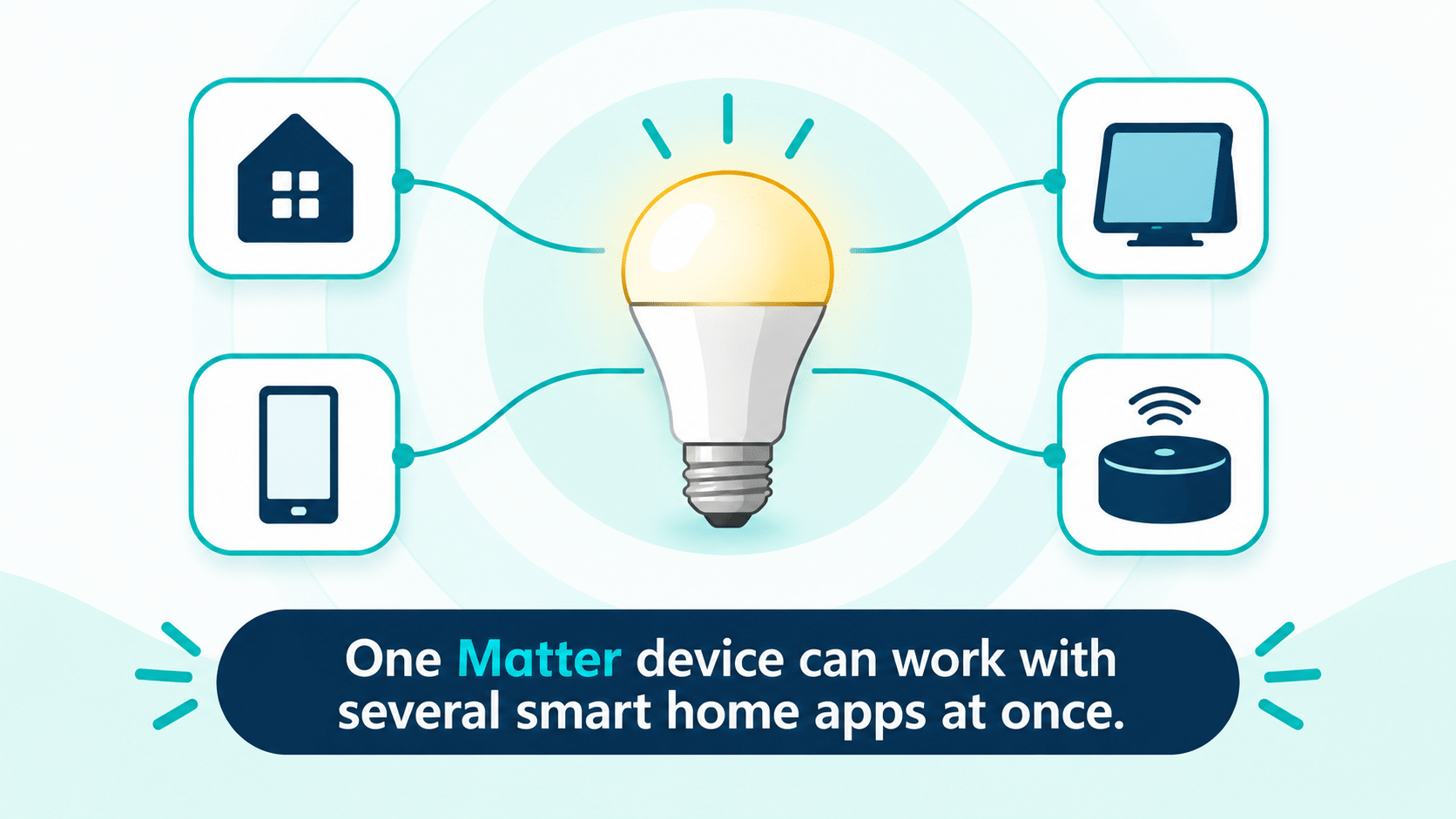
Matter is the fix for that app mess. It’s an open standard from the Connectivity Standards Alliance, backed by Apple, Google, Amazon and Samsung, so one device can work with Alexa, Google Home, Apple Home and SmartThings at the same time. It runs over Wi-Fi and Thread, a low power mesh network that suits battery sensors.
Adoption is finally real. As of October 2026 the CSA ledger lists 12,615 certified Matter product models from 483 companies, according to MatterCatalog, and nearly 6,000 models were certified in the twelve months to September 2026 alone. A Smart Home Compared analysis reported by Electronic Times found 47.9% of smart home products launched in 2026 support Matter, up from 28.9% in 2023.
For you as a buyer, IoT in 2026 means less lock-in. If a bulb carries the Matter logo, you are not trapped in one company’s ecosystem.
How Are AI Assistants Changing IoT in 2026?
This is the twist. AI didn’t kill IoT, it’s giving IoT a brain. Old voice assistants needed exact commands. The new ones understand normal speech.
Amazon says Alexa+ is now available to everyone in the US and tens of millions of people use it, including controlling several devices with one sentence. Google is replacing Assistant with Gemini for Home, which expanded to 16 more countries in April 2026. Indian users are still waiting for full rollouts, but the direction is clear.
Instead of saying “turn off bedroom light” and “turn off fan” separately, you can say “I’m going to sleep” and the assistant figures out the rest.
Also Read: If you like building that kind of logic yourself on Android, our Tasker profiles guide shows how far phone automation can go.
What Is Edge AI and Why Does It Change IoT?
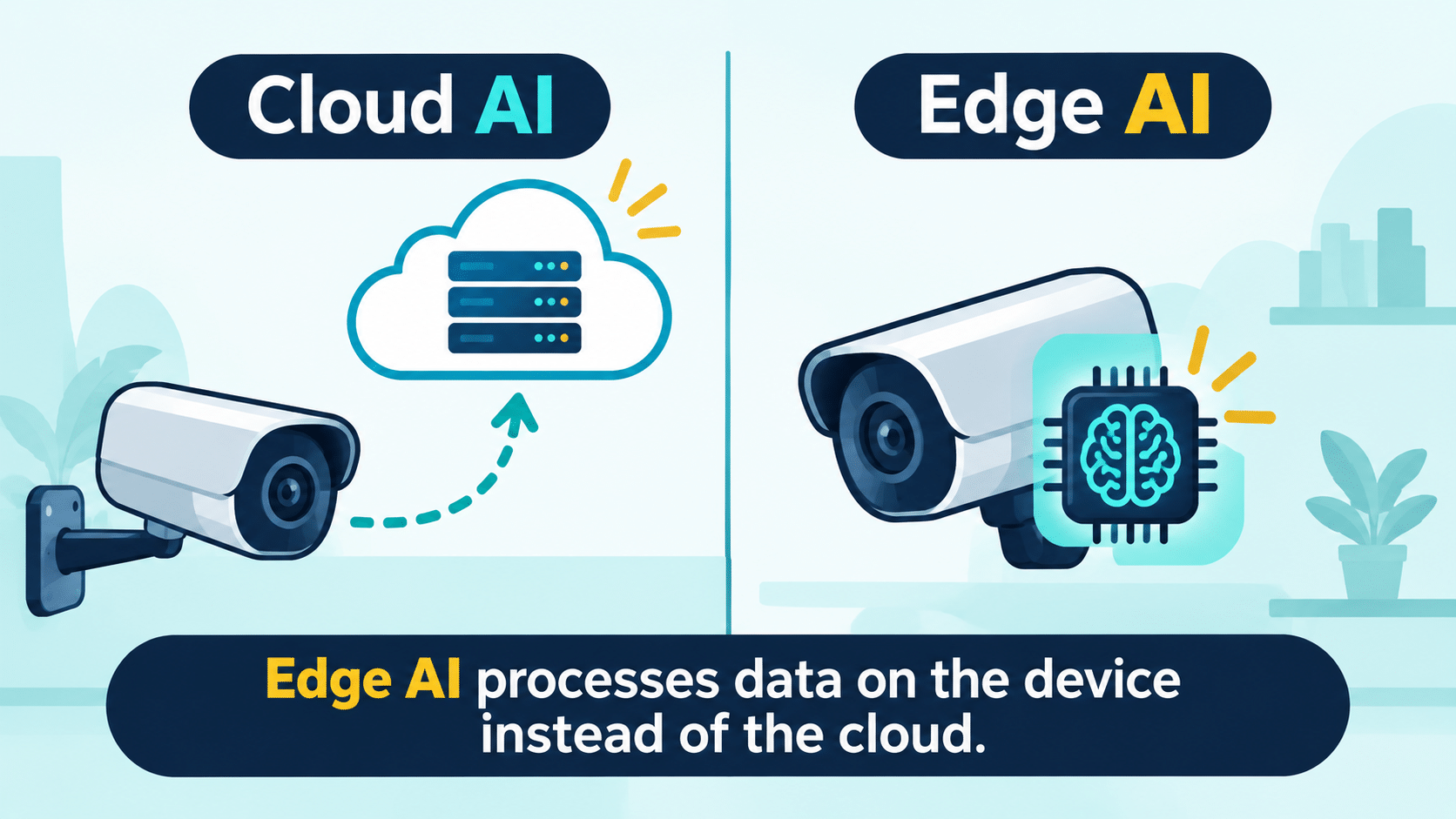
Edge AI means the device does the thinking locally instead of sending everything to the cloud. A camera that recognises a person on its own chip is faster and keeps your footage at home.
We’re early here. IoT Analytics estimates that less than 1% of IoT connections had a true edge AI component at the end of 2025, but it expects that share to rise sharply as agentic and physical AI arrive. It also put the enterprise IoT market at $324 billion in 2025, with India and China named as growth drivers for 2026.
Is IoT in 2026 Growing in India?
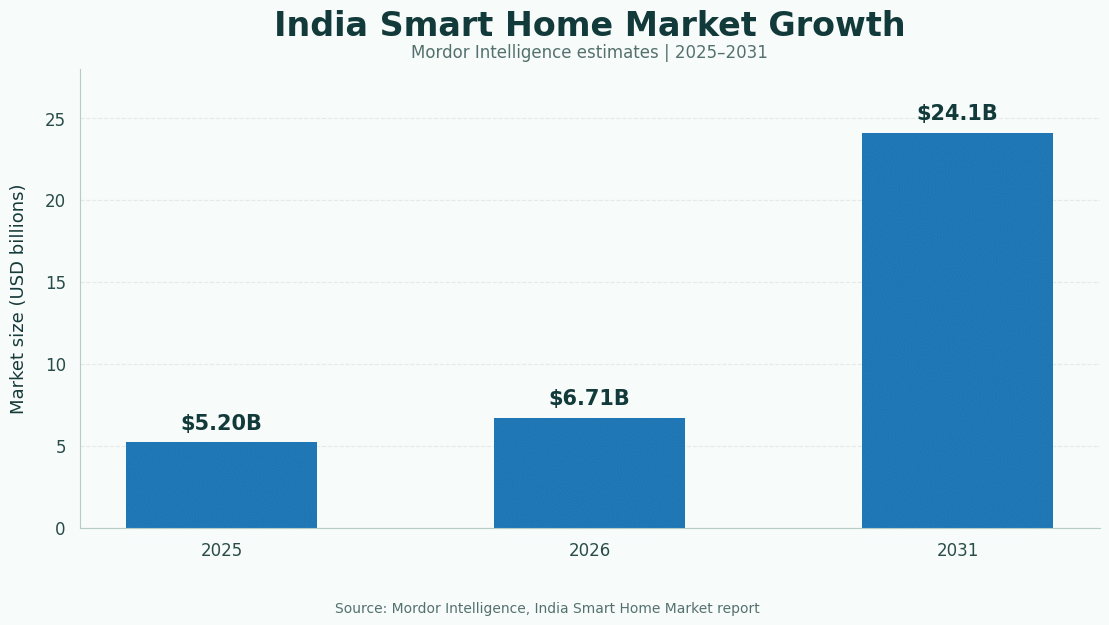
Yes, and quickly. Mordor Intelligence estimates the Indian smart home market at $6.71 billion in 2026, up from $5.20 billion in 2025, and projects $24.1 billion by 2031. It credits 5G reach, Matter and voice assistants in Indian languages, with security and surveillance the biggest category.
A 2026 NIQ India paper adds a useful reality check. Awareness of smart home devices is around 90% across categories, yet everyday use drops to roughly two thirds outside daily service devices. People are buying smart gear faster than they are living with it.
That matches what you see at home. Smart bulbs, Wi-Fi plugs and retrofit switch modules that fit behind normal boards are cheap now, and they are how most Indian homes get started.
Where Else Is IoT Hiding in Plain Sight?
Look at your wrist. Smartwatches and fitness bands are IoT devices that track heart rate, sleep and steps and sync all day. Look at your car too. Many new cars come with an app that shows location, locks doors and sends alerts, which is IoT on wheels.
Then there’s the stuff you never notice, like smart electricity meters, delivery trackers, price labels in big stores and water sensors on farms. None of it feels like “the Internet of Things”. It just feels like how things work now.
Are Smart Devices Safe, or Is IoT Security Still a Worry in 2026?
Security is still the weak spot, but rules are finally catching up. The EU’s Cyber Resilience Act has required manufacturers to report actively exploited vulnerabilities within 24 hours since 11 September 2026, and its main rules on secure design and updates apply from December 2027. In the US, the FCC’s voluntary Cyber Trust Mark label is slowly rolling out.
For your own home, a few habits go a long way:
- Change default passwords on every new device.
- Keep firmware updated.
- Buy from brands that actually push security updates.
- Put smart gadgets on a separate guest Wi-Fi if your router allows it.
Also Read: qubic blockachain
Is IoT in 2026 Still Worth Caring About?
Absolutely. IoT in 2026 didn’t fade, it graduated. Matter fixed the compatibility mess, AI assistants are making devices feel smart for real, and markets like India are only getting started.
You don’t need to rebuild your home to join in. A couple of smart bulbs, a retrofit switch module and a speaker are enough to feel the difference. Start with one room, and we’re working on a hands-on guide for exactly that, so stay tuned.
Frequently Asked Questions
Is IoT still relevant in 2026?
Yes. There were around 21 billion active IoT devices at the end of 2025 according to IoT Analytics and Transforma Insights, and both expect that number to roughly double over the next decade. It is just called smart home, wearables or connected cars now.
What is the difference between IoT and a smart home?
IoT is the broad idea of everyday things connecting to the internet. A smart home is one part of it, focused on lights, switches, cameras, speakers and appliances inside your house.
Do I need Matter devices to build a smart home?
No, but it helps. Matter devices work across Alexa, Google Home, Apple Home and SmartThings, so you are not locked into one brand if you change your mind later.
How is AI changing smart home devices?
New assistants like Alexa+ and Gemini for Home understand natural speech and can control several devices from one request. Edge AI also lets devices like cameras process data locally, which is faster and more private.
Are cheap smart devices safe to use?
They can be, if you change default passwords, keep firmware updated and buy from brands that release security updates. Putting smart gadgets on a separate Wi-Fi network adds another layer of safety.
Is the smart home market growing in India?
Yes. Mordor Intelligence estimates it at about $6.71 billion in 2026 and expects it to reach $24.1 billion by 2031, driven by 5G, Matter and affordable devices.