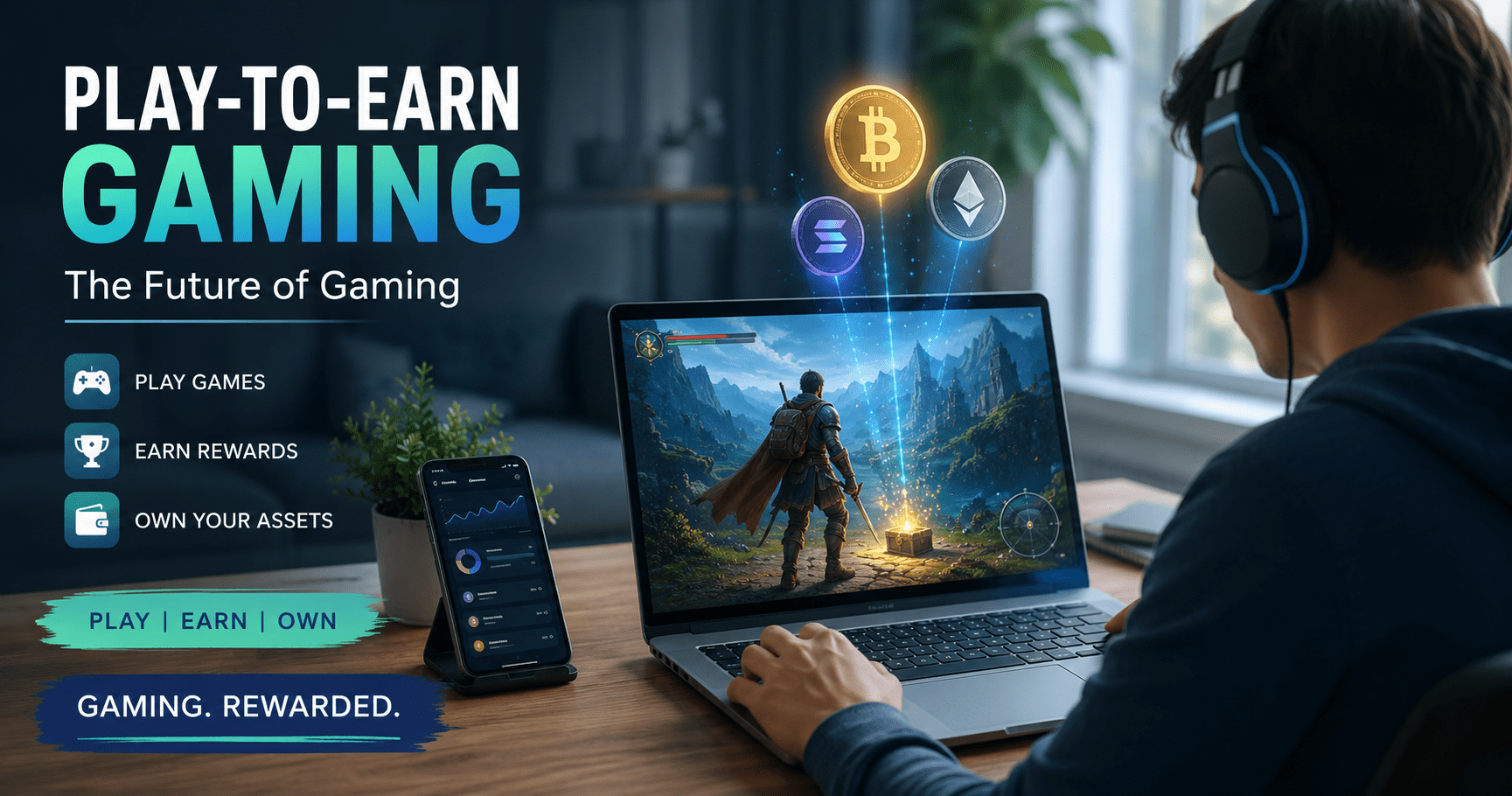

Play-to-earn gaming lets you earn cryptocurrency or NFTs for playing, instead of just spending money to progress. It flips the usual gaming model: rather than buying skins or currency that stay locked inside one game, you can walk away holding assets that have value outside it.
Also Read: buy first crypto beginners guide
That said, “earn” doesn’t mean “guaranteed income.” Before you put time or money into any P2E game, it helps to understand both sides clearly.
What Play-to-Earn Gaming Actually Means
In a typical Web2 game, you might spend real money on skins, characters, or in-game currency. The developer owns those assets, not you. If the servers shut down, everything you bought disappears with them.
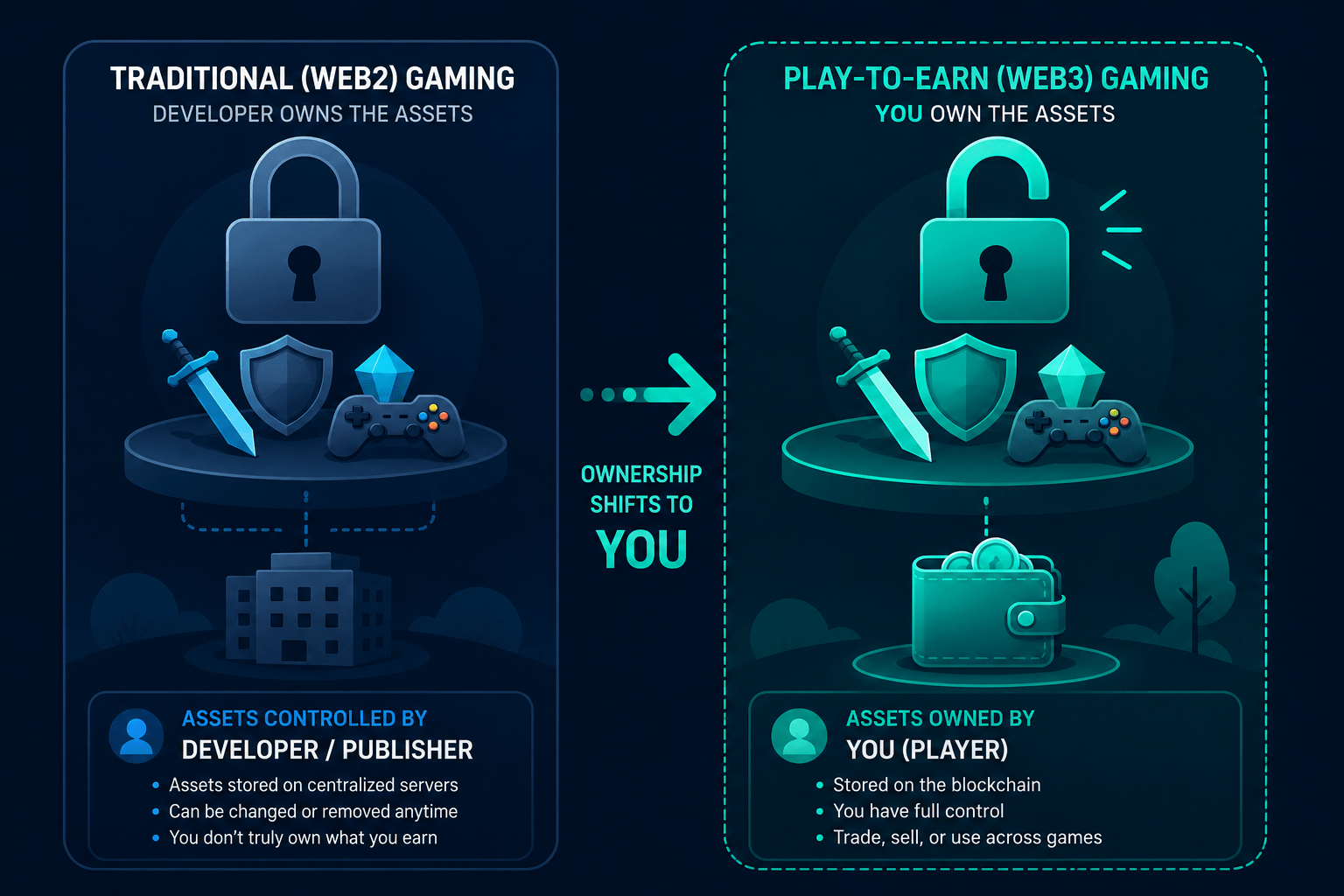
Play-to-earn gaming runs on Web3 infrastructure instead. Assets are usually represented as NFTs, which live on a blockchain rather than a company’s private server. That means you can hold, trade, or move them independently of whether the game itself keeps running.
How It Differs From Traditional Gaming
The core difference comes down to who owns what:
| Feature | Traditional (Web2) Gaming | Play-to-Earn (Web3) Gaming |
|---|---|---|
| Asset ownership | Developer/publisher | Player (via NFT/wallet) |
| Assets survive server shutdown | No | Often yes |
| Can trade assets outside the game | Rarely | Usually, on NFT marketplaces |
| Value source | None (sunk cost) | Market-driven, volatile |
Why Players Are Interested in Play-to-Earn Gaming
A few real reasons players try play-to-earn gaming:
- Asset ownership: In-game items exist as NFTs you control, not licensed content tied to one platform.
- Optional income potential: Some players earn tokens or NFTs they can sell, though this depends entirely on the game’s economy staying healthy.
- Active game economies: Players can influence a game’s direction more directly than in closed Web2 titles, sometimes through DAOs.
- Community ties: Shared financial stakes tend to create tighter player communities than typical multiplayer games.
None of this means income is steady or guaranteed. Treat any P2E earnings as speculative, not salary.
The Risks You Need to Know Before You Start
This is the part most P2E content skips, and it matters more than any of the benefits above.
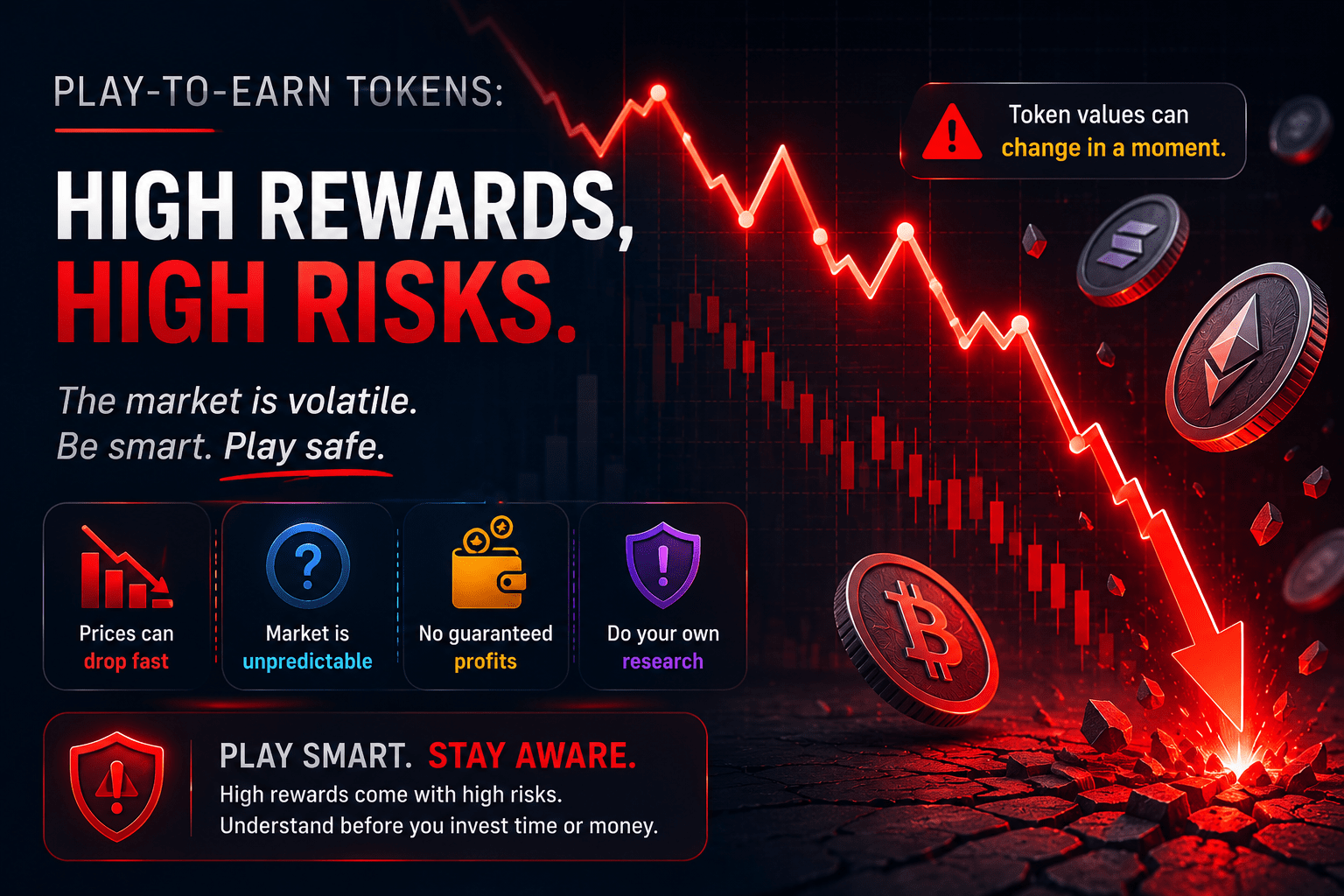
- Token value can collapse. Several major P2E games have seen their in-game token price drop over 90% after early hype faded. Past examples include Axie Infinity’s SLP token losing most of its value within a year of launch.
- “Earning” often requires upfront spending. Many P2E games require buying NFTs or characters before you can start earning, which means you’re risking real money, not just time.
- Regulatory uncertainty is real. Crypto and NFT rules vary by country and are still evolving. What’s legal today may face new restrictions.
- This is not financial advice. Nothing here should be read as a recommendation to buy, sell, or invest in any specific token, NFT, or game. Do your own research and only risk money you can afford to lose.
Also Read: how to set up two factor authentication
How Teams and Developers Earn From Play-to-Earn Games
Players aren’t the only ones with a stake in a P2E economy. Developers typically generate revenue through:
- Token sales: Early funding rounds that sell project tokens to investors before launch.
- Transaction fees: A small cut of blockchain transactions inside the game’s economy.
- Optional in-game purchases: Cosmetic or progression items players buy even though it isn’t required.
- Licensing and partnerships: Successful titles can lead to spinoffs, licensing deals, or sequels.
This is worth knowing because a game’s revenue model often predicts how sustainable its player payouts will actually be.
The Role of NFTs and Decentralization in Play-to-Earn Gaming
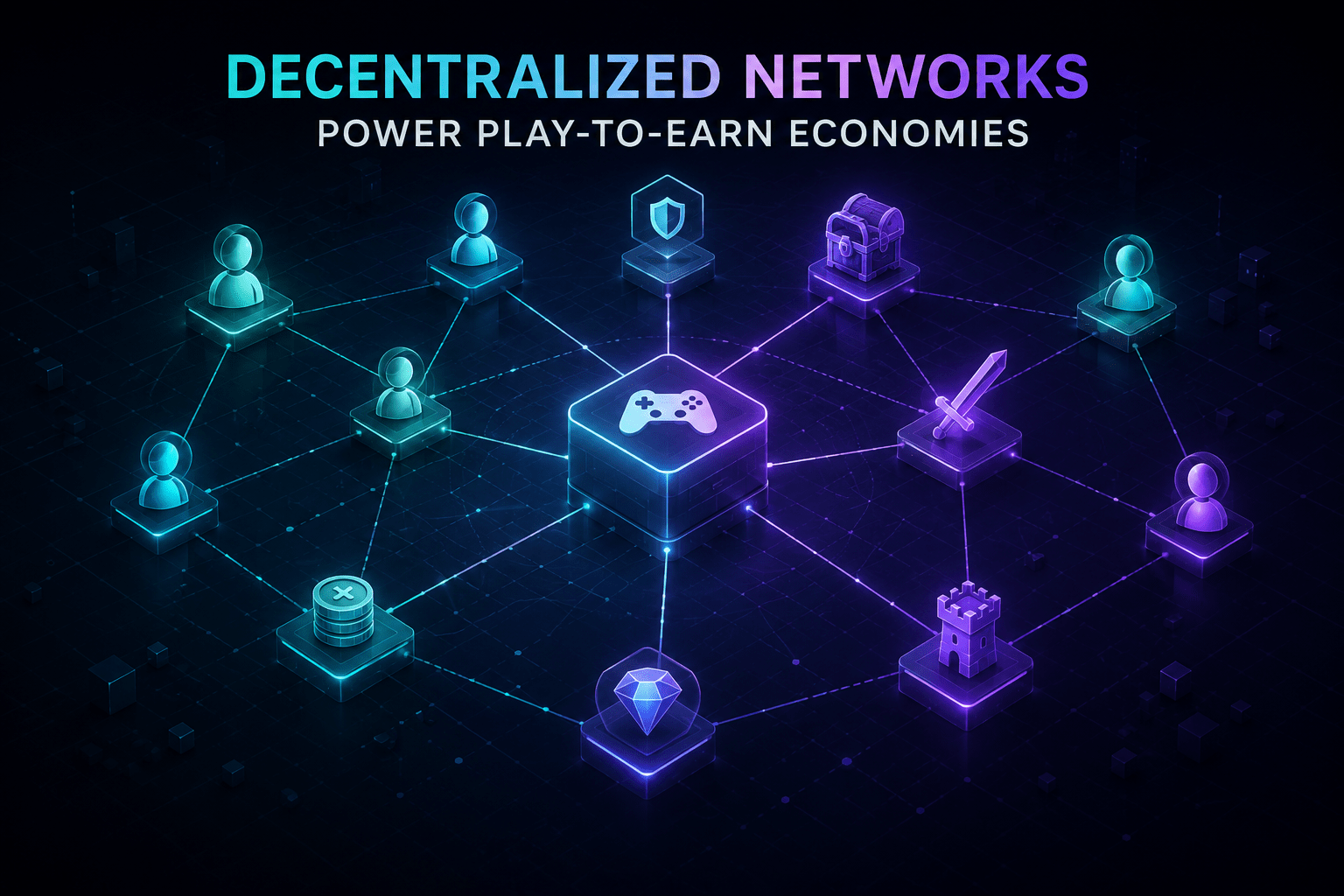
NFTs are what make ownership provable in play-to-earn gaming. Each one is a unique, verifiable record on the blockchain, which is what lets you trade or sell an in-game item independently of the game’s own servers.
Why Blockchain Matters for Ownership
Because P2E games run on decentralized networks rather than one company’s servers, they offer:
- Transparency: Transactions and game data are publicly verifiable on-chain.
- Portability: NFTs can move between compatible marketplaces and wallets.
- Reduced single-point manipulation: No single server admin can quietly alter your holdings, though smart contract bugs and exploits are still a real risk.
FAQ
Is play-to-earn gaming a reliable way to make money?
No. Token and NFT values in P2E games are volatile and have crashed hard in past cycles. Treat any earnings as speculative, not dependable income.
Do I need to spend money to start playing a P2E game?
Often, yes. Many P2E titles require buying an NFT or character before you can earn anything, so factor that upfront cost into your decision.
Are play-to-earn games legal everywhere?
Rules vary by country and are still evolving. Check your local regulations around crypto and NFTs before participating.
What happens to my NFTs if a P2E game shuts down?
Since NFTs live on the blockchain rather than the game’s own servers, you typically keep the NFT itself, but it may lose most or all of its practical use or value if the game’s ecosystem disappears.
Conclusion
Play-to-earn gaming gives players real ownership over in-game assets in a way traditional Web2 games never have. But the earning side comes with genuine financial risk, upfront costs, and no guarantees. If you’re curious, start with a game that has low entry cost and treat any tokens you earn as a bonus, not income you can plan around.