
Large language models are powerful, but they can get expensive if you are not careful about prompt optimization. Every token you send and receive costs money. At scale, poorly written prompts can quietly increase your monthly bills.
The good news is that most token waste comes from prompts that are longer or more complex than needed. With a few simple changes, you can often reduce token usage significantly while keeping (or even improving) the quality of results.
In this guide, we will look at practical prompt optimization techniques to lower your LLM costs in 2026.
Also Read: [What Are Tokens in Large Language Models? Simple Explanation with Examples]
Why Prompt Optimization Matters
Tokens are the basic units that language models use to process text. The more tokens your prompt and response use, the higher the cost. This is really the core idea behind prompt engineering: get the same quality answer using fewer tokens.
When you run many requests every day, even small savings add up. Optimizing prompts helps you:
- Reduce API costs
- Get faster responses
- Stay within rate limits more easily
- Maintain better control over output quality
Common Reasons Prompts Waste Tokens
Most developers waste tokens in a few common ways that basic prompt optimization fixes:
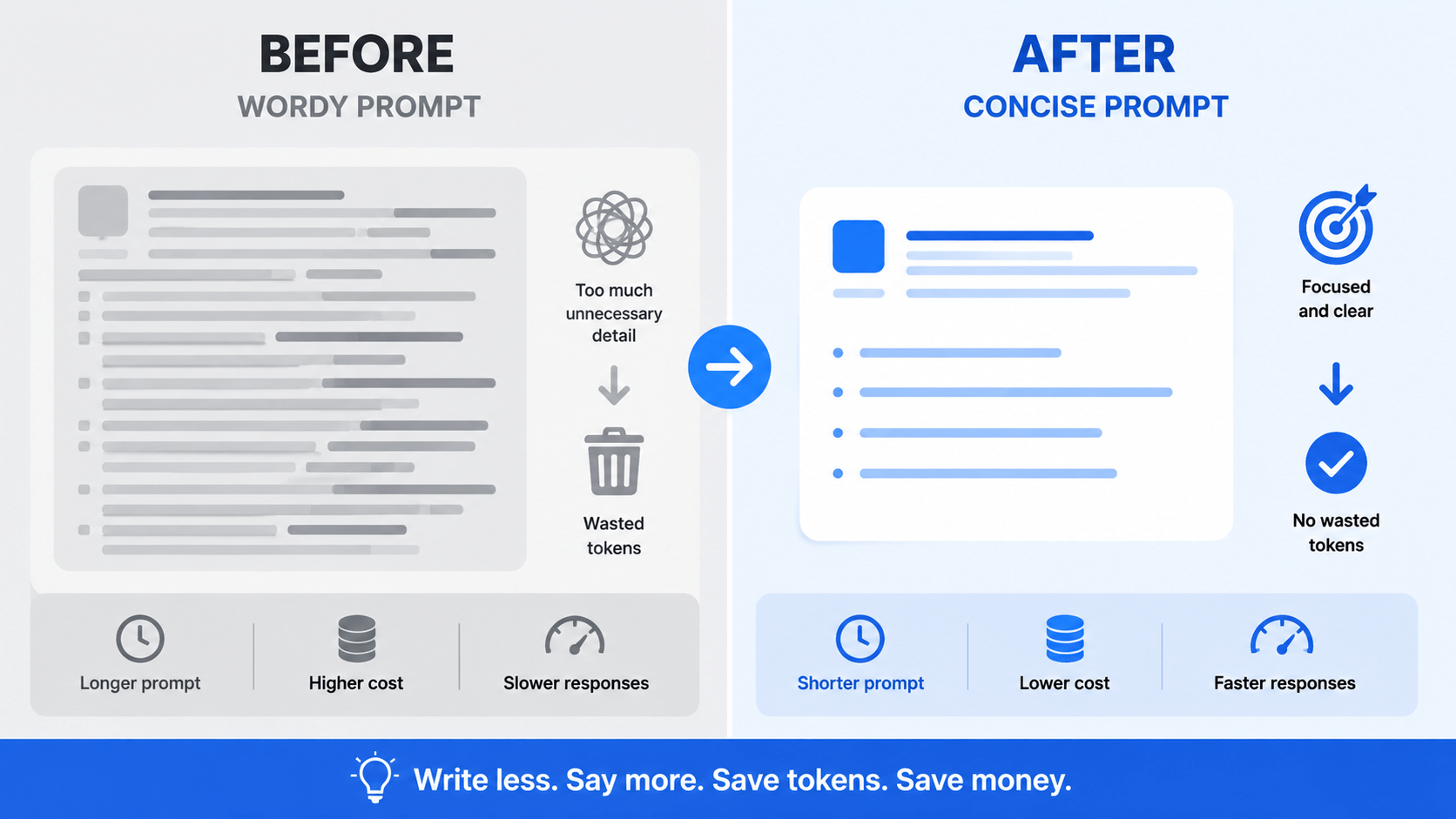
- Writing long and wordy instructions
- Adding too many examples
- Not controlling the length of the answer
- Repeating the same system prompt without caching
- Including unnecessary details or polite language
Fixing these issues is usually enough to see clear savings.
Practical Techniques to Reduce Token Usage
Here are the most effective prompt optimization techniques you can start using today to cut API costs.
1. Write Clear and Concise Instructions (Prompt Optimization Basics)
Long explanations are often not needed. Models understand short and direct prompts very well.
Before: “Could you please carefully analyze the following code and provide a detailed explanation of what it does, including possible improvements and any potential bugs?”
After: “Review this code. List major issues and suggested improvements in short bullet points.”
2. Use Structured Output
Asking for a specific format usually reduces unnecessary text and makes the response more useful. It’s a simple prompt optimization habit that costs nothing to adopt.
Examples:
- “Return the answer as a JSON object.”
- “Use short bullet points only.”
- “Reply in maximum 5 lines.”
3. Limit Output Length
Always tell the model how long the answer should be. Length limits are another easy prompt optimization lever.
Examples:
- “Answer in under 80 words.”
- “Give only 3 key points.”
- “Return the final answer only, no explanation.”
This works especially well when combined with the max_tokens setting in your API call.
4. Enable Prompt Caching
Many providers now support prompt caching. This is one of the biggest cost-saving features available in 2026.
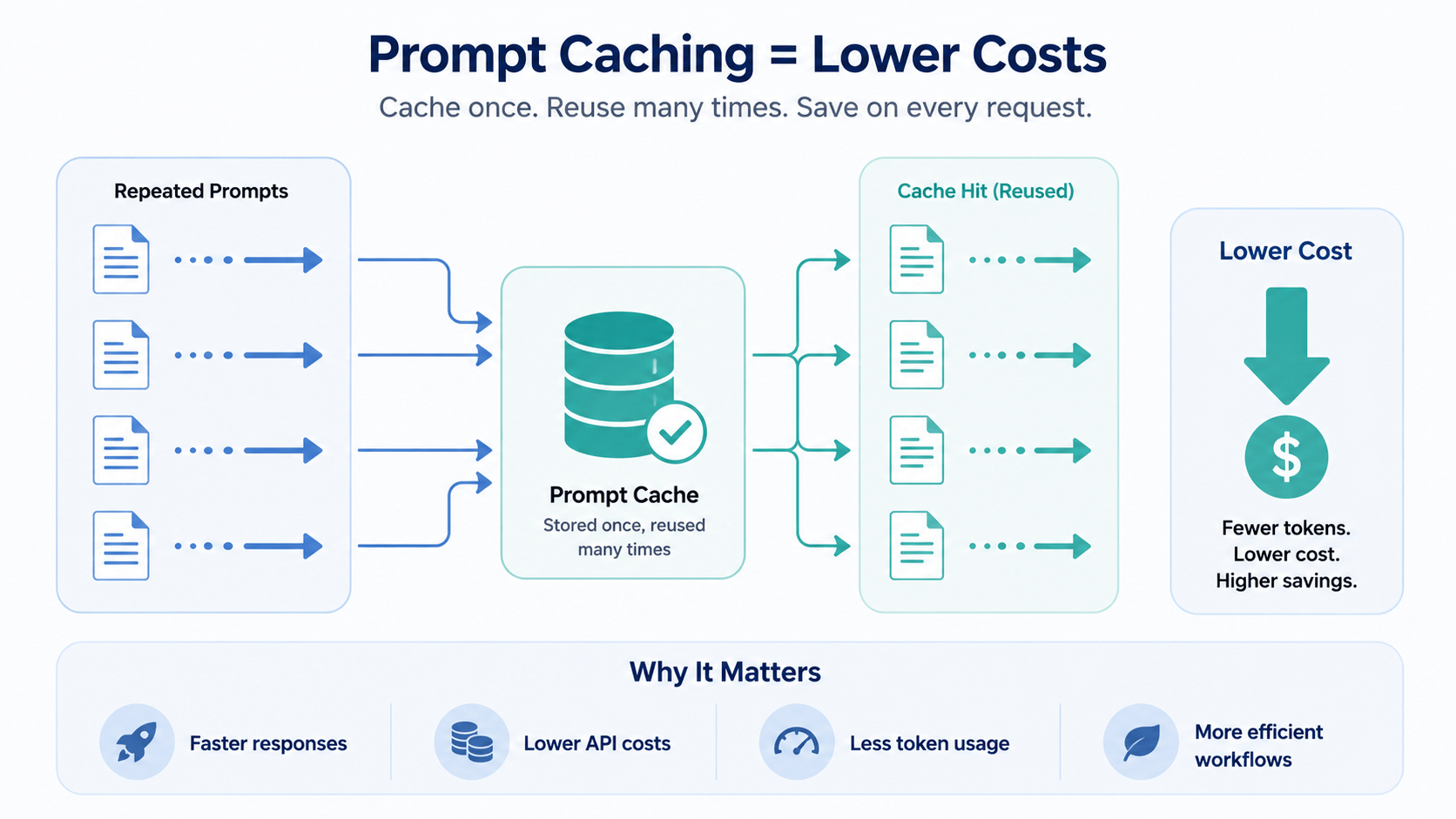
If your system prompt stays the same across multiple requests, caching can significantly reduce the cost of input tokens.
5. Reduce Few-Shot Examples
Few-shot prompting is useful, but each example adds tokens. In most cases, one or two strong examples are enough. Sometimes zero-shot (no examples) works just as well, and it’s a quick prompt optimization win when your examples are running long.
6. Clean Your Input Text
Extra spaces, line breaks, and formatting can increase token count. Clean the text before sending it to the model when possible.
7. Choose the Right Model
Not every task needs the most expensive model. Use smaller and cheaper models for simple tasks, and reserve stronger models for complex reasoning. Model selection counts as prompt optimization too, not just how you word the prompt.
Also Read: [How Token Limits and Context Windows Actually Work in 2026]
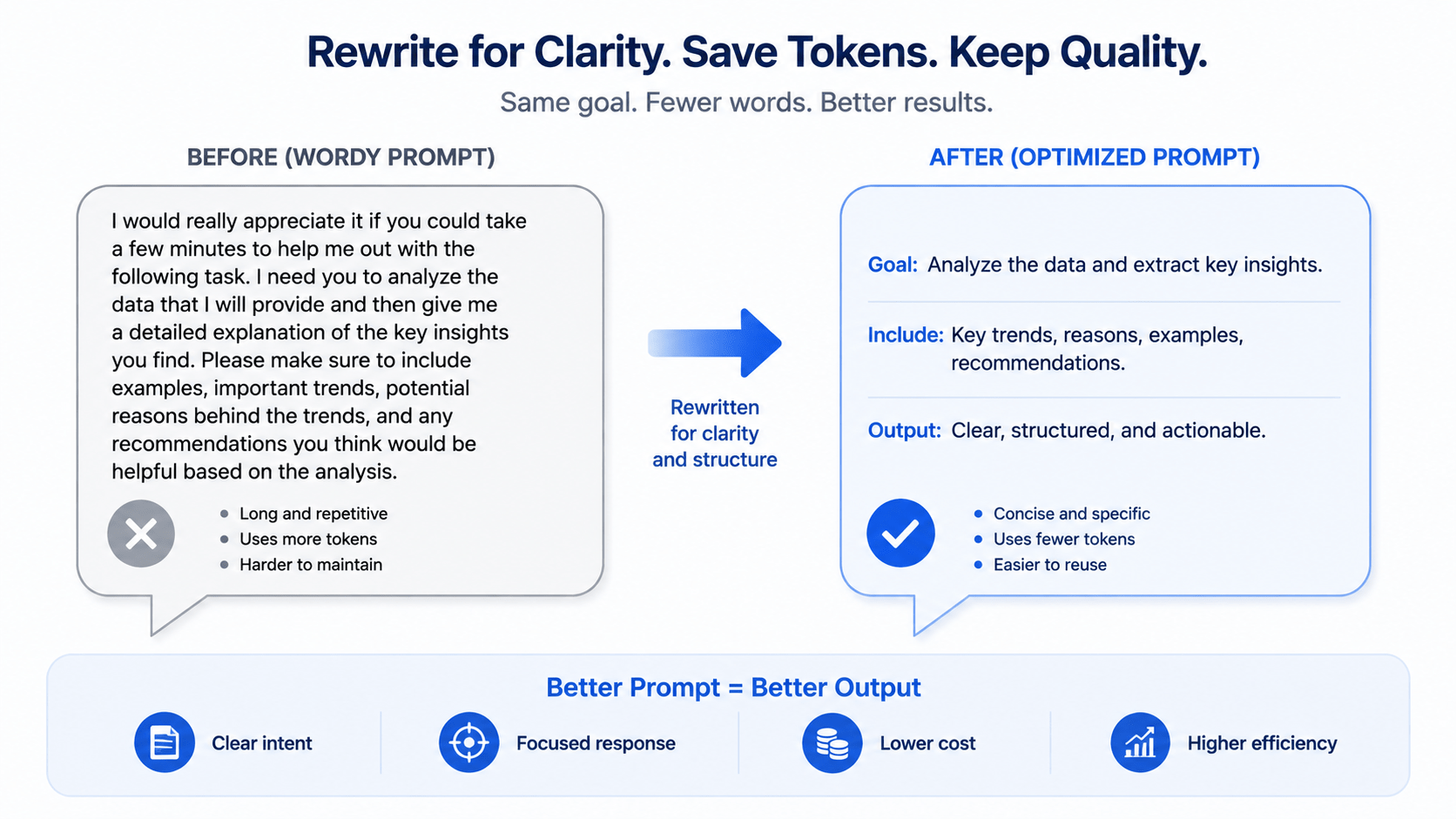
Before vs After Example
Original Prompt (Higher Tokens): “You are a highly experienced senior software engineer. Please carefully review the following function and provide a detailed analysis of its logic, performance, readability, and possible improvements. Also explain any potential bugs you notice.”
Optimized Prompt (Lower Tokens): “Act as a senior engineer. Review this function. List:
- Major issues
- Performance concerns
- Suggested improvements Keep the answer short.”
The second version usually uses fewer tokens and still produces high-quality output.
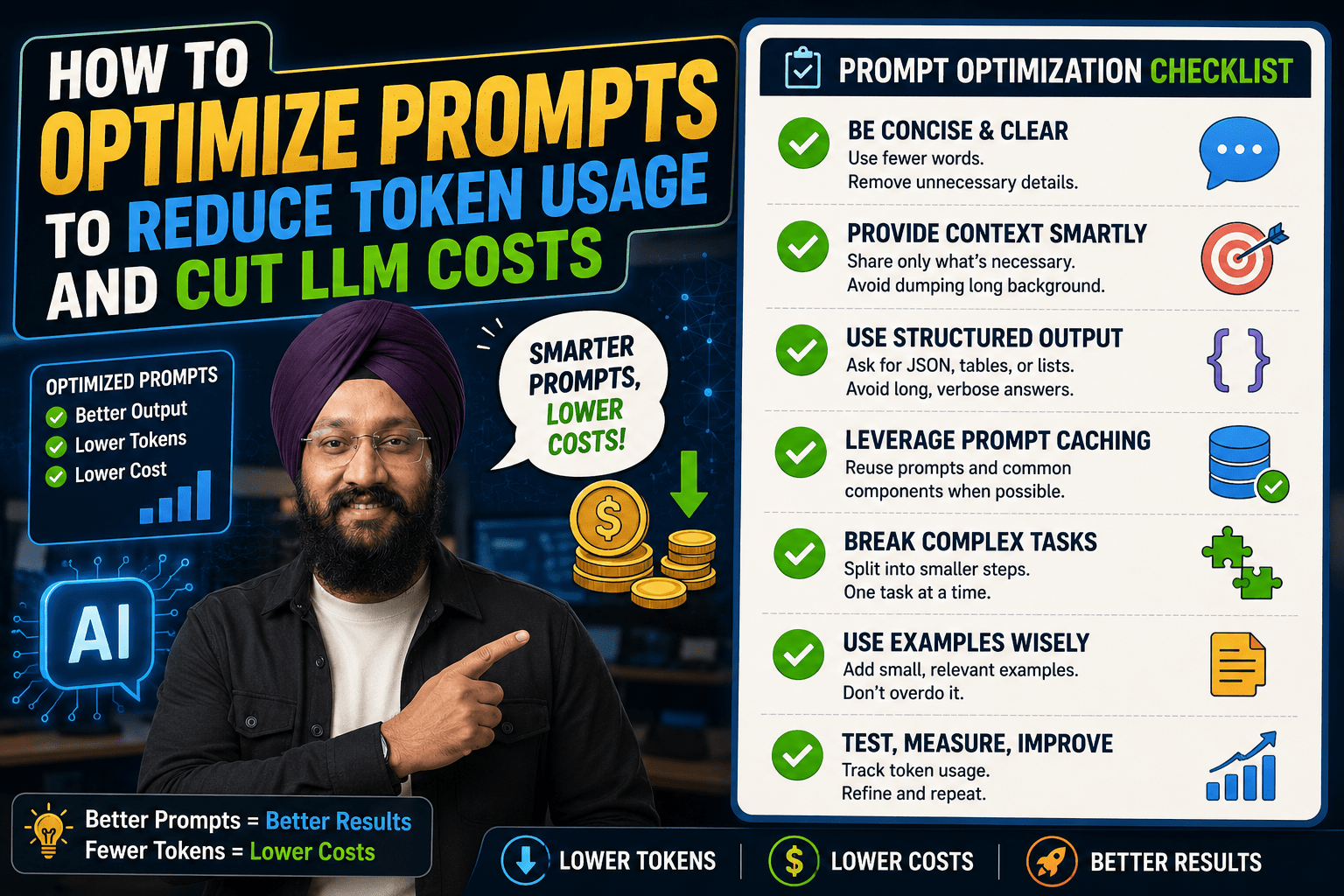
Quick Optimization Checklist
This checklist covers the fastest wins for AI cost saving, in rough order of impact:
- Make instructions short and direct
- Request structured output
- Set clear length limits
- Enable prompt caching when available
- Use fewer examples
- Clean input text
- Match the model to the task difficulty
- Monitor token usage regularly
Conclusion
Optimizing prompts is one of the easiest ways to reduce LLM costs without sacrificing quality. Small changes in how you write instructions can lead to meaningful savings over time, especially if you make many API calls. That is prompt optimization, and token optimization more broadly, in a nutshell.
Start by reviewing your most frequent prompts. Apply a few of the prompt optimization techniques above and measure the difference. Over time, these habits will become part of your normal workflow and help you get better results at lower cost.
Think of this as a running LLM cost reduction playbook rather than a one-time fix. Bookmark it as your developer AI tips checklist and revisit it as pricing changes these llm tips 2026 developers rely on today will likely need a refresh once new models and pricing tiers ship.