

Does Windows 11 Home edition support Remote Desktop?
Windows 11 Home is the latest iteration of Microsoft’s flagship operating system designed for personal use. While it offers a host of new features and an improved user interface, it lacks certain business-centric functionalities, such as the built-in Remote Desktop feature found in Windows 11 Pro. But what if you need remote access on Windows 11 Home? But don’t worry – there’s still a way to set up remote desktop functionality using third-party tools, and one of the best remote control software options available is AnyViewer.
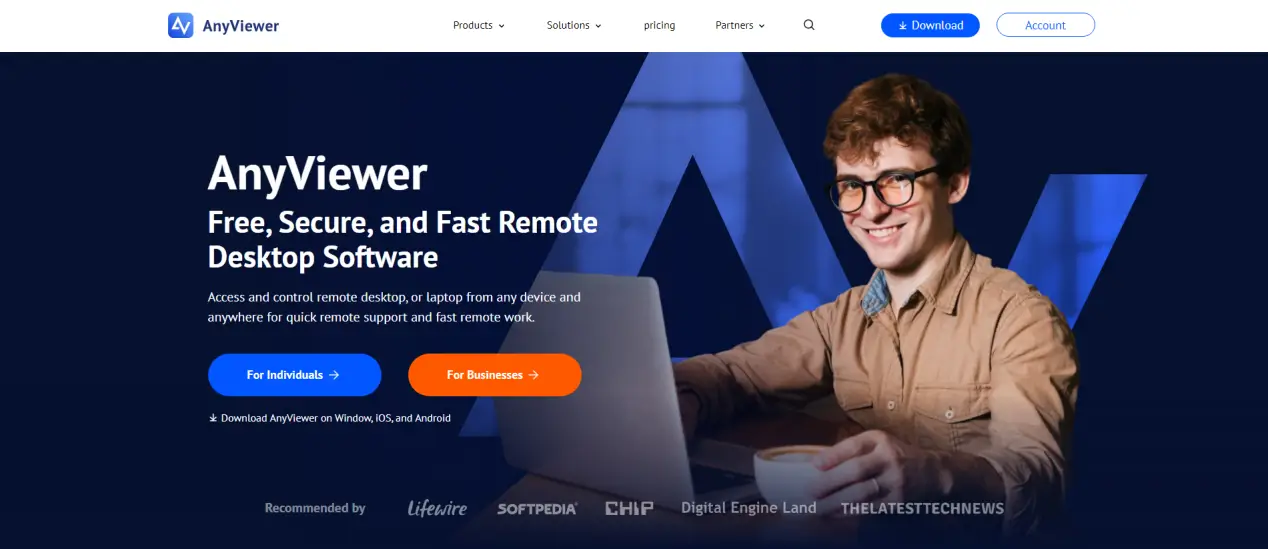
In this article, we’ll explore how you can enable remote desktop Windows 11 Home edition, specifically by introducing AnyViewer as the solution to bridge the gap. We’ll guide you through the setup, security considerations, and troubleshooting tips to make your remote desktop experience smooth and efficient.
Why Windows 11 Home Cannot Host a Remote Desktop Session
Microsoft splits Remote Desktop into two roles. The client is the app you use to connect to another computer, and the host is the computer that accepts the incoming connection. Windows 11 Home includes the client (Remote Desktop Connection, or mstsc), so a Home laptop can connect to a Windows 11 Pro or Enterprise PC. What Home cannot do is act as a host, so nobody can connect to a Home PC using the built-in Remote Desktop Protocol (RDP).
To check which edition you have, open Settings > System > About and look at the Edition line under Windows specifications. If it says Windows 11 Home, the “Remote Desktop” toggle under Settings > System will tell you that your edition does not support it. Your options are a paid upgrade to Pro or a third-party tool that works on any edition.
AnyViewer’s highlights for remote desktop on Windows 11 Home
AnyViewer stands out as one of the best and easiest tools for enabling remote desktop Windows 11 Home free. It offers a range of features that make it an excellent choice for both personal and professional use. Here’s why:
- User-Friendly Interface
AnyViewer comes with a simple, intuitive interface that makes the setup process a breeze. Even users with minimal technical knowledge can quickly get up and running. The installation is straightforward, and all you need to do is create an account and log in on your devices—no complicated configurations required for seamless connections.
- Robust Security Features
When it comes to security, AnyViewer excels. It utilizes advanced protection measures, including end-to-end encryption and two-factor authentication, ensuring your remote sessions remain secure from unauthorized access. This is particularly important for users handling sensitive data or working in industries where security is a top priority.
- Multi-Session Support
AnyViewer offers multi-session support, enabling you to connect to several devices at once. This feature is particularly useful for IT professionals and support teams who need to manage multiple systems or assist various users simultaneously, streamlining their workflow.
When comparing remote access tools, it is also helpful to understand how different technologies support multiple users and devices. This guide that explains Remote Desktop Services outlines how Microsoft RDS works, its key benefits and limitations, and whether it remains a suitable choice for businesses in 2026. Understanding these factors can help IT teams evaluate their options and select a remote access solution that meets their performance, management, and scalability needs.
- No Network Setup Needed
Unlike traditional Remote Desktop Protocol (RDP), which often requires complex network configurations or a VPN for external access, AnyViewer allows remote connections over the internet with zero complicated setup. This makes it easy to remotely control computer from another computer, without the hassle of additional network configurations.
- Additional Features
Beyond basic remote control, AnyViewer offers a suite of helpful features like file sharing, clipboard synchronization, and integrated chat. These tools make collaboration during remote sessions more efficient, allowing for smoother communication and data exchange.
Steps to set up and use AnyViewer on Windows 11 Home
Using AnyViewer to remotely access a Windows 11 Home desktop is both fast and easy. With just a few simple steps, you can set up your remote connection and start working from anywhere. Here’s a detailed guide:
Step 1: Download and Install
First, visit the official AnyViewer website and download the software on the remote computer (the Windows 11 Home device you want to control). If you’re new to AnyViewer, create an account. Log in directly if you already have one.
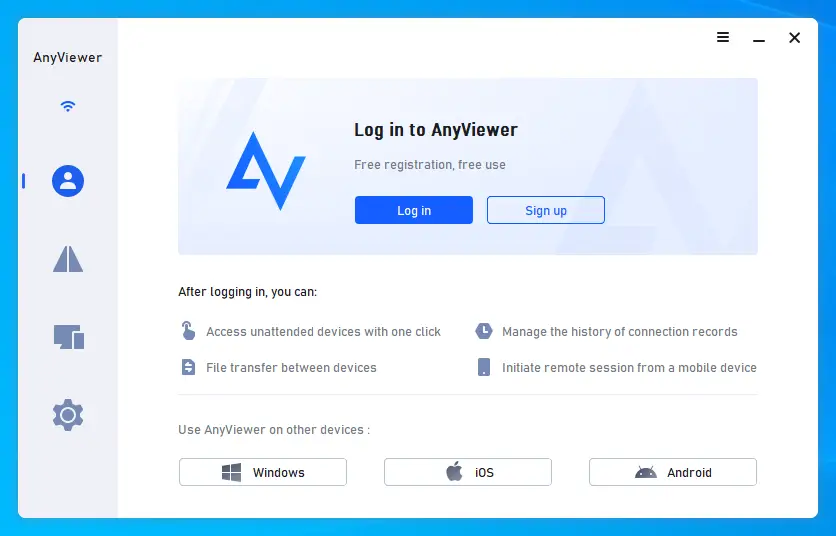
Step 2: Set Up Your Device
Next, install AnyViewer on your local device, whether it’s a smartphone, PC, or laptop. After installation, log in with your account information to sync the devices.
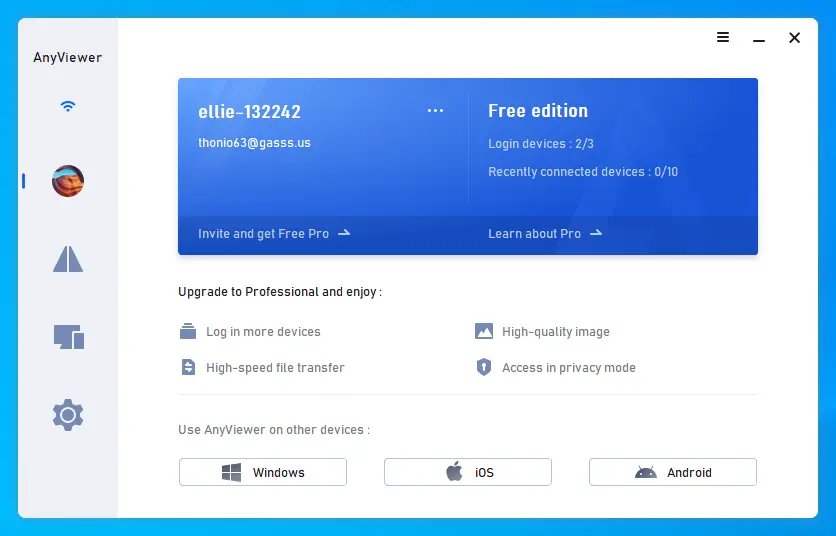
Step 3: Connect Remotely
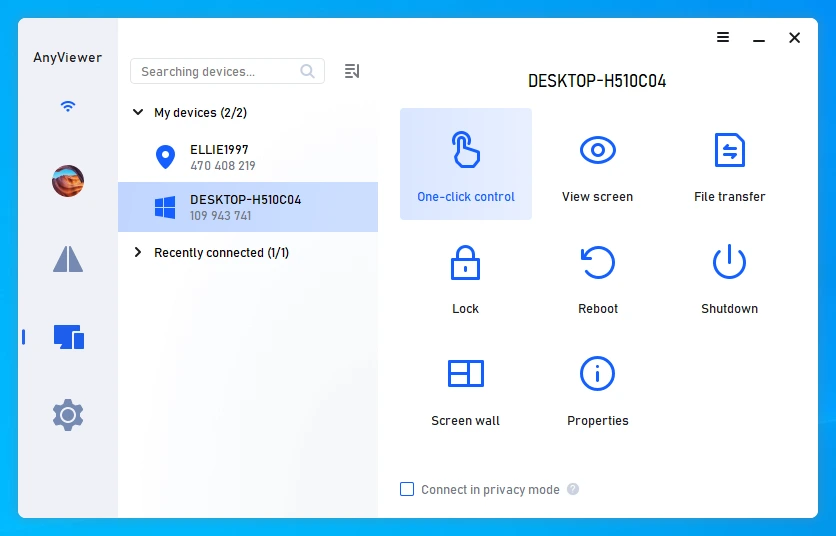
On your local device, go to the “My devices” section. Find the remote desktop you want to access and click on it. Then, use the “One-click control” option for an easy and seamless connection.
Remote Desktop Options for Windows 11 Home Compared
AnyViewer is not the only way to reach a Home PC. Here is how the common options compare:
| Option | Works as Host on Windows 11 Home? | Best For | Notes |
|---|---|---|---|
| Built-in Remote Desktop (RDP) | No, Pro or higher only | Office networks and IT-managed PCs | Usually needs port forwarding or a VPN for access outside your network |
| Upgrade to Windows 11 Pro | Yes, after upgrading | Users who also want BitLocker, Hyper-V and Group Policy | Paid upgrade from Settings > System > Activation |
| Quick Assist | Yes (built in) | One-time help from a friend or support person | Someone must be at the remote PC to accept every session |
| Chrome Remote Desktop | Yes | Basic personal access through a browser | Free, needs a Google account and Chrome |
| AnyViewer | Yes | Unattended access, file transfer and multi-device control | Account-based login, no router or firewall changes needed |
If you only need a family member to fix something on your PC once in a while, Quick Assist is enough. If you want to reach your own computer any time without someone sitting in front of it, a tool like AnyViewer or an upgrade to Pro is the better fit.
Security Tips for Remote Desktop on Windows 11 Home
Remote access gives someone full control of your computer, so follow these habits whatever tool you use:
- Use a strong, unique password for your remote access account and never reuse your email password.
- Turn on two-factor authentication wherever the tool supports it. Our guide on how to set up two factor authentication explains the different methods and which one to pick.
- Only accept sessions you started. Scammers often call pretending to be from Microsoft or your bank and ask you to install a remote tool.
- Sign out or lock the remote PC (Windows + L) when the session ends, especially on a shared or office computer.
Troubleshooting Common Remote Desktop Problems
| Problem | Likely Cause | What to Try |
|---|---|---|
| Remote PC shows as offline | The computer is asleep, shut down or not connected to the internet | Turn off sleep while plugged in, check the network and make sure the app starts with Windows |
| Session is slow or laggy | Weak Wi-Fi, low upload speed on the remote side or a high resolution | Switch to a wired connection, lower the image quality and close bandwidth-heavy apps |
| Cannot control the mouse or keyboard | The session was approved as view only, or an admin prompt is blocking input | Request full control and run the app as administrator if you need to handle UAC prompts |
| “Remote Desktop is not available” in Settings | You are on Windows 11 Home | Use a third-party tool such as AnyViewer or upgrade the edition to Pro |
If the remote computer itself keeps freezing or crashing, fix that first, because no remote tool can work around a failing PC. These simple tips to troubleshoot computer issues are a good place to start.
Frequently Asked Questions
Can Windows 11 Home Connect to Another PC Using Remote Desktop?
Yes. Windows 11 Home includes the Remote Desktop Connection client, so it can connect to a PC running Windows 11 Pro, Enterprise or Education. It just cannot accept incoming RDP connections itself.
Is There a Free Way to Use Remote Desktop on Windows 11 Home?
Yes. Quick Assist is built in and free for supervised help sessions, and tools such as AnyViewer and Chrome Remote Desktop offer free plans for personal use that work on the Home edition.
Is Remote Desktop Safe to Use at Home?
It is safe when you use a reputable tool, protect the account with a strong password and two-factor authentication, and never accept connection requests from people you do not know. Most remote access scams rely on tricking the user, not on breaking the software.
Conclusion
In conclusion, while Windows 11 Home doesn’t include built-in Remote Desktop functionality, AnyViewer is the perfect solution to enable remote desktop Windows 11 Home. With its intuitive interface, strong security features, and ease of use, AnyViewer provides a seamless and secure remote access experience, even for users without technical expertise. Whether you’re working from home or managing multiple devices, AnyViewer ensures you can effectively use remote desktop on Windows 11 Home without complex setups.



Pingback: How To Recover Deleted Files From Windows Server 2012 [2025] – Sky Forbes